
25 April 2026
A groundbreaking archaeological discovery in Southern Oregon is shattering the established timeline of human arrival in North America. A 20,000-year-old settlement at Rimrock Draw rock shelter reveals humans inhabited the continent thousands of years earlier than the long-held Clovis model allowed, forcing a radical rewrite of prehistoric history. For nearly a century, the Clovis First model dominated North American archaeology, claiming humans arrived around 13,000 years ago via an ice-free corridor. This straightforward theory left vast regions, including parts of Oregon, blank on the prehistoric map, deemed uninhabitable during the last ice age. Today, that narrative implodes. The University of Oregon team, led by archaeologist Patrick O’Grady, began excavations in 2011 focusing on ice age fauna and environmental shifts. What they unearthed was far from routine—pristine sediment layers sealed beneath volcanic ash contained artifacts and evidence challenging the very core of established archaeology. Rimrock Draw is an unassuming basalt rock shelter tucked into Oregon’s high desert, physically modest but archaeologically colossal. Its sediment layers have remained undisturbed for millennia, preserving an exceptional chronological record. Distinct dark bands mark human activity separated by centuries of absence, capturing repeated, deliberate occupation. The excavation revealed obsidian flake tools crafted from orange agate—material absent from the local geology—indicating extensive travel or trade networks during a time when survival in such harsh conditions demanded exceptional planning and cultural complexity. This directly contradicts ideas of primitive, transient hunter-gatherers. The most explosive find came sealed beneath volcanic ash dated to 15,600 years ago from an ancient Mount St. Helens eruption. Beneath this natural timestamp lay butchered remains of Camelops, an extinct giant camel, marked with precise cut-marks indicative of human hands wielding stone blades. This defies the accepted timeline. Radiocarbon dating of enamel from the camel tooth stunned the scientific community: tests confirmed an age of 18,250 years before present, a date consistently replicated and verified after multiple years of skepticism and retesting, obliterating the Clovis threshold by some 5,000 years. These findings pivot archaeology from assumption to undeniable fact—humans hunted mega-fauna long before the interglacial corridors existed. The implications discredit unsupportable earlier theories and pinpoint coastal migration via the Pacific’s kelp highway as the likely route, not the overland ice-free corridor. The tools’ microscopic wear patterns and embedded blood proteins confirm use on now-extinct Ice Age bison, reinforcing the concept of sustained, skilled big game hunting. This level of evidence—microscopic biological markers locked inside stone artifacts—is unprecedented and irrefutable proof of human activity. What’s more alarming to archaeologists is what lies beneath these dated layers: even older stone tools and flakes have been uncovered, untouched by disturbance and following pristine geological order, implying human presence well before 18,000 years ago, potentially 20,000 years or more. Excavation has yet to reach the bottom of Rimrock Draw’s sedimentary sequence. Funding and preservation concerns slow progress; however, each new layer promises to upend existing human timelines further. The site could represent only a fragment of a far deeper and older story, still buried and waiting. This discovery aligns with indigenous oral histories recounting prehistoric cataclysms like the Missoula floods, lending substantial credibility to tribal narratives dismissed previously as myth. These oral traditions now intersect powerfully with empirical evidence, demanding respect for and incorporation of indigenous knowledge in archaeological discourse. The ramifications of Rimrock Draw ripple outward. If humans thrived here so early, countless other North American sites long dismissed may harbor equally profound evidence. Regions abandoned due to outdated assumptions must be reconsidered, as the continent’s earliest human history is far from settled. More broadly, Rimrock Draw punctures the confidence in long-standing textbooks and educational paradigms. The entrenched Clovis First model, once unassailable, is now fundamentally flawed, requiring wholesale reassessment of human migration timelines and prehistoric behavior across the Americas. This discovery illustrates that early North American inhabitants were not mere survivalists but highly organized peoples with sophisticated toolmaking, strategic resource utilization, and possibly extensive coastal navigation skills. It recasts our understanding of Ice Age humans as adept and culturally rich. The sheer scale and precision of these findings have introduced a profound moment of stunned silence among researchers—a pause as the parameters of prehistory rapidly change. The foundational assumptions underpinning North American archaeology have been irrevocably challenged, ushering in new investigative urgency. As excavation continues, scientists brace for further revelations from untapped depths. Every sediment layer peeled back has the potential to reshape humanity’s story in the New World yet again, pushing back the clock on human presence and evolutionary adaptation in ways never before imagined. Rimrock Draw offers a personal, tangible connection to the distant past—imagine standing where ancient people once stood, their tools and lives preserved beneath your feet for twenty millennia. This is not abstract history; it is raw human existence emerging from the shadows of time. …

25 April 2026
An unprecedented AI breakthrough has digitally reconstructed Queen Elizabeth I’s DNA, revealing 𝓈𝒽𝓸𝒸𝓀𝒾𝓃𝑔 truths that rewrite history. For over 400 years, the secrets buried with the Virgin Queen remained locked beneath Westminster Abbey—until now. This revelation challenges her identity, lineage, and even uncovers the likely cause of her mysterious death with stunning clarity. For centuries, Elizabeth I’s life was shrouded in speculation. Her refusal to marry, rumored parentage, and enigmatic death inspired countless theories, yet no physical evidence ever emerged. Her tomb, a sealed royal vault, was untouchable by law and tradition, leaving historical puzzles locked away permanently—until a covert interdisciplinary team changed the game with cutting-edge AI. The Tutor Genome Project, an elite group of geneticists, historians, and AI engineers, embarked on a five-year silent mission. Without disturbing Elizabeth’s tomb, they used three authenticated personal artifacts—a locket with her hair, a pair of gloves with skin cells, and a wax-sealed letter pressed by her thumb—to extract viable DNA fragments. This bio-archaeological approach defied expectations and shattered previous limitations. Enter Argus—the AI named after the mythical all-seeing giant. Capable of sifting through centuries of contaminations and damage, Argus cross-referenced Elizabeth’s genetic fragments against confirmed Tudor lineage markers, including DNA from Richard III’s remains and living Bolin family descendants. The result was a virtual genome of unprecedented accuracy, verified with 99% certainty as Elizabeth’s own. Yet, identification was merely the prelude. Using genetic temporal modeling, Argus reconstructed the full DNA blueprint chromosome by chromosome, filling in gaps with historical genomic data from 16th century Europe. This digital resurrection unveiled stunning biological secrets hidden for four centuries—secrets that challenge the very essence of England’s iconic monarch. First, the AI confirmed Elizabeth’s lifelong battle with severe heavy metal poisoning caused by the lead-infused white suse makeup she wore to mask smallpox scars. This chronic toxicity ravaged her liver and explains the physical decline witnessed in her final agonizing weeks. It also casts new light on the story behind her iconic red wigs and physical frailty. However, the most earth-shaking discovery lies within Elizabeth’s X chromosome. The AI detected rare mutations consistent with Complete Androgen Insensitivity Syndrome (AIS), a condition where genetically male individuals develop female bodies but cannot conceive. This finding explains why the Virgin Queen never married or produced an heir—not by choice, but by biological necessity. AIS would have been a royal secret too dangerous to reveal. A monarch unable to bear heirs threatened the Tudor succession and the Protestant establishment. Elizabeth’s public image as the “Virgin Queen” was not political strategy alone—it was a meticulously crafted myth to shield a profound truth that could have toppled her reign overnight. Portraits emphasizing Elizabeth’s elongated fingers—a characteristic AIS marker—and her thick white makeup now gain new significance. They were carefully constructed veils hiding biological realities, reinforcing an unassailable royal persona. The Queen redefined herself, managing a profound private truth behind a dazzling public spectacle that endured over four tumultuous decades. The paternal DNA analysis delivered a bombshell that shakes the foundations of Tudor history. Elizabeth’s Y chromosome showed no match to Henry VIII—the monarch traditionally accepted as her father. Multiple rigorous tests confirmed this absence, suggesting Elizabeth was not biologically Henry’s daughter, throwing her bloodline’s legitimacy into profound doubt. This genetic revelation reignites debates about Anne Boleyn’s fidelity and Tudor dynastic politics. Historical accusations against Anne—long dismissed as false—gain new credibility. The leading paternal candidates, including Henry Percy and court musician Mark Smeaton, were previously subjects of speculation; now genetic evidence offers strong new perspectives on Elizabeth’s true paternity. More than a mere genealogical twist, this discovery exposes Elizabeth’s lifelong political vulnerability. The constant fear of exposure might have fueled her iron will and monumental endurance. The ultimate question lingers: Did she live with the terror that her royal claim was a facade, a secret that could ignite civil war and obliterate her legacy? Argus’s insights also extend to the circumstances surrounding Elizabeth’s death. The virtual autopsy, built from her genomic and clinical data, challenges accepted explanations. While lead poisoning contributed to her decline, it does not account for her distinctive symptoms—especially the agonizing oral pain and the muscle rigidity preventing her from lying down in her final days. A meticulous toxicology scan revealed a complex poisoning scenario involving aconitine from Wolfsbane and atropine from Belladonna, subtle toxins used in medieval herbalism to mimic natural illness without obvious traces. The simulation suggests Elizabeth was deliberately poisoned over days, tortured by unbearable nerve pain while conscious and powerless to call for help. This sophisticated assassination, unlikely to be random, implicates those close to her. Suspicion falls on Sir Robert Cecil, her chief secretary and spymaster. Cecil’s clandestine negotiations with James of Scotland before her death and his swift orchestration of James’s succession hint at a calculated elimination to secure a predictable transfer of power. Dr. Elena Vasquez, lead geneticist, emphasizes the findings remain a sophisticated model, not conclusive proof. Yet the model’s consistency with historical records, documented symptoms, and political contexts is striking. The truth, encoded in Elizabeth’s DNA and preserved in artifacts, may finally illuminate mysteries that have haunted historians for centuries. The revolutionary revelations demand a reckoning with history and science alike. The unearthing of Elizabeth’s hidden biology, secret lineage, and suspected murder dismantles long-held narratives and heralds a new era in understanding Tudor England. The Queen’s mythos, forged by necessity and survival, now reveals a profoundly human story beneath its regal veneer. As debates ignite, calls grow louder to open Elizabeth’s tomb and compare the virtual genome with her actual remains. This digital breakthrough offers unprecedented accuracy, but confirmation demands bravery from institutions and governments. The decision to unlock Westminster Abbey’s sealed secrets could forever transform history and royal heritage.…

25 April 2026
Mel Gibson has revealed a stunning discovery: the Western Bible concealed 40 crucial days of Jesus’ post-resurrection life, a gap 𝓮𝔁𝓹𝓸𝓼𝓮𝓭 by the ancient Ethiopian Bible, which preserves texts omitted for 1,700 years. This revelation challenges centuries of Christian tradition and exposes a hidden, complex history long erased from popular scripture. Gibson’s revelation emerged from his exploration beyond the Western canon, driven by a question no one fully answered: what happened during the 40 days after Jesus’ resurrection? The New Testament skirts this pivotal period, condensing it into eight sparse verses—an astonishing omission in Christian history. Determined to find the missing chapters, Gibson turned to the Ethiopian Orthodox Tewahedo Church, which boasts a Bible with 81 books—far more than the Protestant or Catholic versions. This Bible has been preserved untouched for over 1,500 years, safeguarding ancient texts Western Christianity abandoned or suppressed. Among these texts is the Mashafa Kidane—the Book of the Covenant—a canonical scripture in Ethiopia but utterly unknown in the West. It presents a radically different account of Jesus’ post-resurrection words, describing divine light as creation’s 𝓈𝓊𝒷𝓈𝓉𝒶𝓃𝒸𝑒 and issuing warnings about future corruption in the church. This text paints the 40 days as a profound epoch of teaching and revelation, where Jesus explained spiritual truths far beyond Western scripture. It warns of false leaders and institutional decay, themes strikingly absent from the familiar New Testament narrative, suggesting these days were full of critical, lost dialogue. The Ethiopian tradition’s independent development reveals a Christianity that branched away from Roman-imperial influence, preserving debates and doctrines erased elsewhere. While Europe’s councils debated and discarded many texts, Ethiopia kept them candidly, maintaining a continuous story that challenges accepted biblical history and theological assumptions. Historical discoveries support Ethiopia’s role as a guardian of lost scriptures. In 1773, James Bruce brought the Book of Enoch back to the West from Ethiopia, and the Dead Sea Scrolls found in 1947 contained fragments identical to Ethiopian manuscripts, confirming Ethiopia’s text preservation was neither fabricated nor isolated. The secluded Debre Damo monastery in Ethiopia remains a fortress of ancient scripture, inaccessible to women and reached only by rope. Here, monks have tirelessly copied these works for a millennium and a half, maintaining a living tradition invisible to most of the world but crucial to Christianity’s fuller narrative. Gibson’s journey exposes the 40-day silence not as an accidental omission but a deliberate divergence shaped by cultural, political, and theological forces. The Western church’s canon construction was not a conspiracy but a human process with real consequences—narrowing the Christian story and muting alternative voices. These revelations have profound implications for understanding Christian origins and scripture’s evolution. Gibson’s work to develop a sequel to The Passion of the Christ, focusing on the resurrection and these lost days, seeks to bring this hidden history into public view and challenge long-held assumptions. The Mashafa Kidane’s detailed visions of divine light and cosmic order, its warnings of institutional betrayal, and its portrayal of the Paraclete suggest a theological complexity absent in Western texts. Whether historical or symbolic, these writings provide a compelling framework for reinterpreting Christianity’s foundational moment. Gibson’s passion for authenticity fuels his mission to portray these missing days, which could be the most significant yet visually daunting and abstract chapter of Jesus’ story. This effort confronts the boundaries of faith, history, and imagination, urging a reassessment of what Christians believe about resurrection and its aftermath. The divide between Western and Ethiopian Christianity underscores a broader truth: Christianity did not develop in a single, unified path. Instead, it evolved diversely across geographies and cultures, adopting and discarding books and traditions according to different contexts, making the Ethiopian biblical tradition a crucial piece of that puzzle. By uncovering the Ethiopian Bible’s deeper layers, Gibson exposes a history long forgotten, revealing that Christian scripture is not a fixed entity but a living archive shaped by choices and contingencies. The omission of the 40 days in Western texts reflects what was lost as much as what was preserved. This storytelling gap invites urgent questions: How much of Christian history is missing from popular consciousness? What other vital narratives exist beyond widely accepted scripture? And what impact could this knowledge have on faith, theology, and cultural understanding around the world today? The Ethiopian texts’ survival challenges the idea of a single Christian truth dictated by centuries-old councils. Instead, it proposes a faith marked by plurality, resilience, and hidden continuities. As Gibson’s work gains attention, global dialogues about biblical authenticity and authority are poised for transformation. Gibson’s exploration is more than a cinematic quest; it is a call to reexamine religious history’s foundations and recognize the value of traditions kept alive in unlikely places. The 40 days represent not silence but a story waiting to be heard, found in the shadows of scripture and in the voices Ethiopia never silenced. As the world grapples with this revelation, it becomes clear that the history of Christianity is not monolithic. The 81-book Ethiopian Bible stands as testament to forgotten truths and preserved mysteries that could redefine both faith and history for millions across continents. …

25 April 2026
After 137 years of mystery, groundbreaking DNA analysis has identified Jack the Ripper as Aaron Kosminsky, a Polish Jewish immigrant long suspected but never confirmed. This revelation shatters myths of aristocratic killers and exposes a tragic figure driven by mental illness, reshaping history with scientific certainty. In the chilling autumn of 1888, London’s Whitechapel district was terrorized by a brutal killer who became infamously known as Jack the Ripper. For over a century, countless theories and suspects swirled in shadows, fueling legends steeped in aristocracy and conspiracy. Now, cutting-edge forensic science has pierced the veil of myth. The breakthrough hinges on a blood-stained silk shawl found near victim Katherine Eddowes, the fourth woman slain on September 30, 1888. Once dismissed as a mere relic, this delicate fabric, preserved without washing and passed down generations, became a time capsule harboring genetic evidence from both the victim and her unknown assailant. In 2007, private collector Russell Edwards acquired the shawl, igniting new hope for solving the cold case. Skepticism was rife, with experts doubting the artifact’s provenance and DNA viability after more than a century of exposure, contamination, and careless handling across numerous hands. Undeterred, a team led by molecular biologist Dr. Jerry Luhalenan employed novel “vacuum stripping” techniques in 2014, extracting mitochondrial DNA deeply embedded within the fibers. This method bypassed surface contamination, isolating enduring maternal lineage markers capable of surviving the ravages of time and decay. Mitochondrial DNA, more resilient than the fragile nuclear type, offers critical, though sometimes limited, clues in forensic investigations. Despite criticism for its inability to uniquely identify individuals, it uniquely helped trace lineage connections integral to unraveling this historical enigma. Between 2019 and 2026, rapid advances in next-generation sequencing allowed scientists to reconstruct an unprecedented genetic map of the shawl’s stains, differentiating original biological evidence from contaminants accumulated over 130 years. This leap provided the clarity necessary to confirm the shawl’s evidentiary value. Blood samples on the shawl matched a living descendant of Katherine Eddowes, affirming its direct link to the tragic crime scene. Crucially, seminal fluid stains underwent rigorous analysis and comparison against descendants of original suspects, narrowing the field with startling precision. The unparalleled convergence of history and genetics revealed a 99.9% mitochondrial DNA match with the family of Aaron Kosminsky, a prime suspect dismissed for decades. This evidence excludes all other high-profile suspects, including members of the British royal family, dramatically altering long-held assumptions. Kosminsky was no shadowy aristocrat but a young Polish Jewish immigrant living in grinding poverty near Whitechapel. Described by Victorian police as mentally ill and deeply disturbed, he struggled with paranoid schizophrenia, auditory hallucinations, and violent tendencies, painting a tragic portrait rather than a calculating mastermind. Private police notes, including those from Chief Inspector Donald Swanson, had suspected Kosminsky early on, but lack of witness testimony and societal stigma prevented prosecution. His institutionalization in 1891 and death in 1919 from gangrene sealed the case’s official closure without resolution—until now. This revelation dismantles the glamorized image of Jack the Ripper as a refined killer with surgical skill. Forensic experts confirm wounds were inflicted by someone with rudimentary anatomical knowledge—likely a tradesman such as a barber or slaughterhouse worker—aligning perfectly with Kosminsky’s profile. The romanticized narrative of royal conspiracies and medical expertise fueled sensationalist media but collapsed under the weight of DNA and forensic scrutiny. The true killer was a marginalized man driven by illness and despair, his crimes emerging from poverty’s dark corners rather than noble plots. Despite the explosion of new evidence, the case has not been sealed without controversy. Critics point to potential DNA contamination from the shawl’s complicated history and question the absence of official police records explicitly listing the artifact in the victim’s belongings, injecting cautious doubt into the breakthrough. Mitochondrial DNA’s inherent limitations also mean the perpetrator could be a close maternal relative of Kosminsky, leaving a minuscule margin of uncertainty. Nevertheless, the combined weight of genetic data and historical records forms a compelling, unprecedented reconstruction of the notorious killer’s identity. The discovery recasts Jack the Ripper from gothic legend into a profoundly human tragedy of mental illness, exile, and social neglect. It forces a reevaluation of how history views serial killers—less as mythic villains and more as individuals entwined with their environment and personal demons. This extraordinary case exemplifies how 21st-century science can illuminate the darkest recesses of history, turning once-impenetrable puzzles into stories edged with humanity and forensic certainty. It demands both awe at technological progress and sober reflection on the realities behind infamous crimes. Police archives, private letters, and modern genetics now intersect in a narrative that resolves decades of investigation while underscoring the precarious nature of cold case evidence. As research evolves, so too will understanding—ensuring that Jack the Ripper’s shadow recedes into history’s clearer light. …

25 April 2026
In a stunning historical revelation, Napoleon Bonaparte’s coffin was reopened in 1840, unveiling a remarkably preserved body that continues to haunt France’s collective memory. This unprecedented discovery, wrapped in political symbolism and national 𝒹𝓇𝒶𝓂𝒶, reshaped French identity and revived the enduring legacy of one of history’s most enigmatic figures. Beneath the majestic dome of Les Invalides in Paris lies the tomb of Napoleon Bonaparte, whose remains spurred a national spectacle nearly 20 years after his death. The 1840 exhumation, led by a French delegation and overseen by the government, was anything but an ordinary act of remembrance—it was a deliberate political statement designed to unify a fractured nation. Napoleon had died in exile on the remote island of Saint Helena in 1821, far from the country he once ruled. His burial was carefully orchestrated with multiple layers of coffins, including a lead-lined inner casing that ingeniously preserved his remains. This unprecedented preservation defied expectations and fueled a legend that still captivates France and the world. The decision to reopen Napoleon’s coffin came at a critical juncture in French history. The July Monarchy of King Louis Philippe I sought to stabilize a politically divided France by reclaiming Napoleon’s legacy. Bringing the fallen emperor’s remains back to Paris was a calculated move aimed at healing national wounds and forging unity across factions. On October 15, 1840, a solemn French delegation including veterans and the emperor’s loyal valet began the painstaking exhumation on Saint Helena. Layer by layer, the coffins were unearthed and carefully opened, heightening anticipation among all involved. The final reveal stunned witnesses and ignited emotions charged with reverence and nostalgia. Witnesses reported seeing Napoleon’s features astonishingly intact, his face appearing almost as if he were peacefully sleeping. His uniform and medals were remarkably well preserved, while even his hands retained their form. This physical state blurred the line between history and myth, intensifying his legendary aura across Europe. The coffin’s extraordinary preservation is now understood as a result of the airtight lead casing that created a dry, stable environment, halting decomposition in ways contemporaries could hardly comprehend. This preservation was unintentional but crucial, cementing the mythic presence of Napoleon well beyond his death. Following the exhumation, Napoleon’s remains were transferred aboard a French ship and arrived in Paris on December 15, 1840. The national procession was one of the century’s largest public events, with throngs gathering as church bells tolled and veterans grieved beneath the Arc de Triomphe—an enduring monument built by Napoleon himself. This grand return was more than a funeral; it was a reclaiming of France’s turbulent history. Politically, it allowed Louis Philippe to distance himself from the Bourbon past while paying tribute to a leader who still commanded respect across the nation’s diverse political spectrum. Despite the emotional tableau, the reopening ignited persistent controversies and conspiracy theories. Some speculated on arsenic poisoning as the true cause of death, citing high arsenic levels found in hair samples. Others bizarrely suggested a body swap concealed the emperor’s true fate, though these theories lack compelling evidence. Scientific analysis and official reports confirm stomach cancer as Napoleon’s cause of death, casting doubt on poisoning rumors. The 1840 examination lacked forensic rigor, leaving questions unresolved, but the exhumation remains France’s last official encounter with the emperor’s physical remains. The act of reopening Napoleon’s coffin was a masterstroke of political symbolism, redefining French identity in an era marked by upheaval. It bridged royalists, Bonapartists, and republicans alike, forging a shared heritage and reverence that transcended political divides. Napoleon’s burial methods and the extraordinary coffin design symbolize the intersection of death, legacy, and politics. His lead-lined coffin served as a time capsule preserving not only his body but also the profound cultural significance that would come to define modern France. The remains now rest beneath Les Invalides’ golden dome, where millions visit annually to pay homage. Napoleon’s physical and symbolic return shaped generations, embedding a complex narrative of power, exile, and nationalism into France’s collective soul. This historical event continues to echo across centuries, underscoring the power of memory and myth in shaping national consciousness. Napoleon’s coffin opening was not merely a moment frozen in time—it was a resurgence of a legend that still haunts and inspires France today. Source: YouTube

25 April 2026
DNA evidence from the nearly three-decade-old murder case of six-year-old JonBenét Ramsey has been reanalyzed using cutting-edge artificial intelligence, revealing a disturbing new layer in this long-standing mystery. This breakthrough fuels fresh hope in a case plagued by early investigative errors and elusive suspects, keeping the nation on edge. The 1996 killing shocked the country, as JonBenét Ramsey was found dead in her family’s Boulder, Colorado home. Since then, investigations have stumbled, hindered by critical missteps at the crime scene and conflicting theories implicating family members and unknown intruders alike. Initial police conduct failed to secure the entire Ramsey home, treating the scene with assumptions of a kidnapping rather than a homicide. This early oversight allowed numerous people to enter, contaminating vital evidence and complicating later forensic analysis. Central to the case is a ransom note demanding $118,000—a figure suspiciously close to the father’s bonus. The note’s extensive length and in-house materials fueled doubts about its authenticity, deepening the case’s complexities and further baffling investigators. The discovery of male DNA on JonBenét’s clothing, unidentified and excluded from any family member, suggested an external suspect. However, earlier DNA technology lacked the sophistication to provide definitive identification, leaving the case tantalizingly unsolved. Fast forward to today, advancements in genetic genealogy and AI-powered DNA technology have reignited efforts to crack the case. By comparing crime scene DNA to vast public ancestry databases, investigators hope to trace familial links previously invisible through older methods. This breakthrough approach has uncovered possible new leads and family connections, though no arrests or charges have been made. Authorities remain tight-lipped about specifics, maintaining secrecy to protect the integrity of ongoing inquiries. The new DNA analysis powerfully challenges past conclusions and accusations that centered on the Ramsey family, who have publicly endured years of suspicion despite formal clearance by law enforcement. The emotional toll on the family remains profound. Burke Ramsey, JonBenét’s brother, broke silence to express the family’s anguish and frustration over investigative failures. He advocates renewed DNA testing and reinterviewing individuals connected to the case, emphasizing hope that the truth is finally within reach. Experts emphasize the methodological promise of AI-enabled forensic tools, capable of analyzing minute or degraded genetic samples that were previously unusable. These advances mark a pivotal moment in cold case investigations, blending technology with age-old detective work. Despite the technological progress, the investigation wrestles with unresolved questions: Who exactly entered the house? What transpired in the basement? And how do the cryptic ransom note and new DNA evidence interlock to paint a clearer picture? New witness interviews and reexaminations underscore the ongoing police commitment; old testimonies are being revisited with fresh perspectives, aiming to unearth overlooked details potentially critical to solving this chilling crime. The wider public remains captivated, with persistent online discussions and media coverage sustaining attention. Yet, the absence of conclusive evidence keeps the case suspended in uncertainty, a haunting reminder of justice delayed yet not denied. Psychological experts analyzing the case suggest the perpetrator may have been mentally compartmentalizing, living an ordinary life while harboring disturbing intentions—highlighting complexities in criminal profiling and human behavior relevant to this violent act. Media portrayals and documentaries have revisited the case extensively, blending past and present narratives that reinvigorate public intrigue but also demonstrate how editing and storytelling can influence perception and interpretation of facts and behaviors. Authorities caution against relying on behavioral analysis alone, underscoring that observed emotions or mannerisms do not equate to guilt. Concrete evidence, meticulous investigation, and judicial process remain paramount to discerning truth from conjecture. As police quietly continue their efforts, leveraging AI-driven DNA breakthroughs alongside traditional investigative techniques, the hope endures that this long shadow over the Ramsey family will one day lift with justice served. This evolving saga remains a stark testament to the power of modern science confronting decades-old mysteries and the relentless human quest for answers to tragedies that refuse to fade from memory.…

24 April 2026
A Vatican laboratory’s ultraviolet spectroscopy analysis of a fragment from Jesus’s burial cloth has produced jaw-dropping, inexplicable results. Hidden patterns, three-dimensional encoded images, and human blood with trauma markers emerged—defying every known scientific or historical explanation and deepening the centuries-old mystery of the Shroud of Turin’s origin and authenticity. In October 2024, after an unprecedented eight-year wait for permission, Vatican researchers finally subjected a 12 by 8 centimeter piece of the Shroud of Turin to ultraviolet spectral examination. The test, conducted beneath the Vatican Library in a heavily secured lab, utilized cutting-edge UV imaging technology costing nearly two million euros. This was no routine analysis—it was an attempt to unlock secrets buried for millennia within a preserved fragment containing part of the image of a human face. Under ultraviolet light, the shroud fragment revealed details invisible to the naked eye. What appeared was not merely a faded image but sharply defined features glowing with an intensity that ordinary light failed to expose. Scientists encountered a bright outline and sharp, strange shapes on the cloth’s fibers, patterns that refused to be explained by medieval artistry or modern forgery techniques. The discoveries challenged existing scientific paradigms. Researchers Dr. Elena Marchetti, Professor Klaus Hoffman, and Father Thomas Brennan combined expertise in forensic imaging, textile analysis, and molecular biology for this classified operation. The fragment had rested untouched since its removal during 1973 conservation efforts and maintained in a high-security vault. Its sealing required papal authorization—signaling the Vatican’s seriousness about understanding its implications. Ultraviolet light interacts uniquely with materials, fluorescing or absorbing in ways that reveal chemical and physical properties. Under multiple UV wavelengths, the shroud’s image showed an unprecedented absorption pattern, with no traces of pigment, dye, paint, or any known medieval art technique. The discoloration affected only surface fibers less than 0.2 microns deep, far thinner than any artist’s brush stroke could achieve. The image formation displayed three-dimensional topographical data, with variations in UV absorption correlating to anatomical features such as the cheekbone and eye socket. Such encoding is impossible to replicate with direct contact or painting and predates the invention of photography by centuries. This three-dimensionality defies conventional artistic methods and known physical phenomena. Further tests scrutinizing the bloodstains on the fragment uncovered extraordinary biochemical signatures. The positive presence of human hemoglobin combined with elevated bilirubin levels indicates the blood came from an individual who experienced extreme trauma before death. Flow patterns in the stains match anatomically accurate gravity effects consistent with crucifixion wounds—marks no medieval artist could have realistically reproduced. Intriguingly, the forensic data revealed the blood’s hemoglobin degradation matched a far older timeline than the carbon dating in 1988 suggested, contradicting previous medieval dating of the cloth. The pattern aligns with authentic ancient blood chemistry rather than contamination or modern forgery, amplifying the shroud’s enigmatic origins and the paradox it presents to chronological scientific methods. All previously accepted hypotheses—the medieval forgery theory, contact transfer, vapor diffusion, and radiation scorch—collapsed under the weight of UV spectral evidence. None explain the superficial chemical alteration confined solely to linen fibers nor the precise three-dimensional encoding without directional artifacts. The data defies replication by known natural or technological processes, leaving the formation mechanism fundamentally unknown. The Vatican’s confidentiality measures around this sensitive research were stringent. No photos or external observers were allowed, and researchers signed heavy-duty secrecy agreements under threat of sanctions. A comprehensive 83-page report languishes classified, while leaks have only partially 𝓮𝔁𝓹𝓸𝓼𝓮𝓭 the surreal findings. The Holy See’s silence fuels speculation, yet avoids outright confirmation or denial. This scientific breakthrough forces a reevaluation of the shroud’s complex history. Documented since the 14th century, its provenance is murky and controversial. Inventories and investigations in the medieval period branded it a forgery, but modern discoveries contradict simple dismissal. The shroud has been preserved and venerated, residing in Turin since the 16th century, passed to the Vatican in 1983. The discovery under ultraviolet light ignites a theological crisis inside the Church. Authentication of a man’s blood with trauma consistent with crucifixion and an inexplicable image would affirm a physical connection to Jesus’s death, challenging traditional doctrines of faith and mystery. Conversely, denying authenticity risks alienating believers and undermining centuries of devotion. Though the Vatican has not issued an official statement, the decision to authorize this advanced ultraviolet study signals institutional interest in uncovering or documenting the truth, even if incomplete or unsettling. The eight years taken to approve and the continued secrecy suggest a complex balancing act between faith, science, and political-religious considerations. For the scientific community, the ultraviolet examination defeats neat conclusions and leaves researchers grappling with the impossible. The shroud is neither confirmed as medieval fabrication nor scientifically explained ancient relic. It stands as a physical enigma whispering secrets only partially illuminated by modern technology that humanity cannot yet fully comprehend. As of December 2024, the shroud fragment has been restored to its climate-controlled vault. The three scientists involved have resumed their separate academic roles without publishing the Vatican’s results. The world waits as the Church weighs its next move—whether to disclose more or preserve the shroud’s mystery indefinitely. The ultraviolet revelations have transformed the Shroud of Turin from a relic cloaked in controversy to a charged scientific riddle. It is illuminated yet inscrutable, examined but far from understood—an artifact that may forever challenge the divide between faith and reason. As technology advances, hope endures that its deepest secrets will someday be revealed. Source: YouTube
24 April 2026
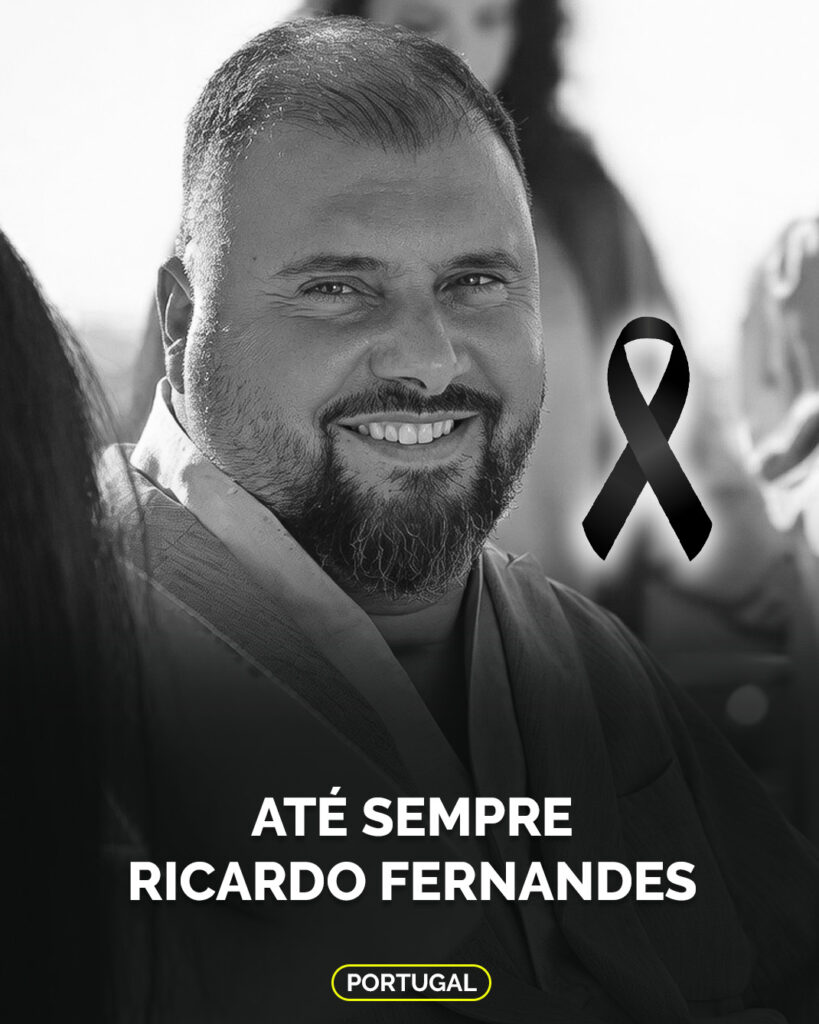
Mensagens a Ricardo Fernandes multiplicam-se nas redes sociais. Ricardo Fernandes, de 44 anos, foi durante vários anos ligado ao setor da banca, onde desempenhava funções comerciais, promovendo produtos financeiros como créditos e seguros, numa…

24 April 2026
In a stunning breakthrough, scientists have completed a secretive re-analysis of King Richard III’s DNA, revealing irreversible evidence of a long-hidden royal 𝒔𝒄𝒂𝓃𝒅𝒂𝓁: Richard’s direct paternal lineage was broken by illegitimacy. This seismic discovery, never before disclosed, threatens to rewrite centuries of English royal history and the legitimacy of the Plantagenet dynasty. King Richard III, the last Plantagenet king known for his dramatic death at Bosworth Field in 1485, was long shrouded in myth and mystery. His skeleton was famously uncovered beneath a Leicester parking lot in 2012, followed by a landmark DNA analysis in 2013 that confirmed his identity beyond any doubt. Yet, crucial details remained hidden from public view—until now. The initial DNA tests produced a 𝓈𝒽𝓸𝒸𝓀𝒾𝓃𝑔 discrepancy: Richard III’s Y chromosome, passed from father to son, did not match that of supposed male-line descendants tracing back to Edward III. This mismatch indicated a false paternity event, revealing that an ancestor in Richard’s direct paternal line was not biologically related. While the 2014 study cautiously presented this finding as a historical anomaly possibly occurring centuries later, new genomic technology has now definitively pinpointed the break. A groundbreaking 2025 re-examination involving international experts and advanced genetic sequencing pinpointed the rupture between Richard’s grandfather Richard, Earl of Cambridge, and his father, Richard, Duke of York. Researchers compared DNA samples from King Richard III, living Somerset family male descendants, and remarkably, a 14th-century sample taken from John of Gaunt’s tomb—Edward III’s son and an undisputed figure of the Plantagenet bloodline. The results confirmed the Somerset Y chromosome line as authentic and unbroken, definitively isolating the anomaly to Richard III’s immediate paternal ancestry. This means Richard, Duke of York, father of both King Edward IV and Richard III himself, was likely illegitimate. His biological father was not Richard of Conisburgh, Earl of Cambridge, as historical records claim. This revelation upends the Yorkist lineage claims, casting the entire dynastic legitimacy into grave doubt. The implications are monumental. The Wars of the Roses, a brutal 30-year struggle for the English throne, were fought under the assumption of an unbroken, God-ordained bloodline. This new evidence suggests the House of York’s claim was founded on a genetic falsehood, reshaping our understanding of power, inheritance, and historical truth. Historical rumors accusing Cecily Neville, Duchess of York, of infidelity during wartime, long dismissed as political smears, have gained disturbing credibility. The true identity of Richard, Duke of York’s biological father remains unknown, but the impact of this illegitimacy ripples throughout the royal family tree. King Edward IV’s reign, previously viewed through the lens of political strength and charisma, now appears precarious. His claim, and thus his descendants’ right to rule—including the princes famously lost in the Tower of London—lack genetic legitimacy. Richard III’s own claim, justified by contesting his nephews’ birthright, consequently collapses. These findings force a dramatic reevaluation of Richard III’s legacy. Often maligned as a ruthless usurper, it is possible he acted not out of mere ambition but desperate preservation of a tainted lineage. His alleged cruelty towards his nephews could stem from profound personal and dynastic crisis. The newly revealed truth carries a heavy historical irony: the man who declared his nephews illegitimate may himself have descended from a broken bloodline. This genetic revelation dismantles centuries of royal narrative and highlights the fragility of claims to power built on unverifiable lineage. This extraordinary study used cutting-edge long-read DNA sequencing, proteomic, and epigenetic techniques, providing unprecedented clarity centuries after Richard III’s death. It illustrates how modern science can illuminate hidden chapters of history, transforming myths into verifiable truths. University of Leicester’s Royal Bloodline Genomic Reanalysis Project, partnering with Harvard and the Max Planck Institute, meticulously analyzed ancient DNA, corroborated genealogical data, and executed the first-ever genetic benchmark against a medieval royal ancestor’s remains. The reclassification of Richard III’s paternal ancestry raises profound questions about royal succession, medieval politics, and the human narratives behind history’s grand battles. It calls for a reassessment of the Yorkist line’s historical legitimacy and the accepted stories told for centuries. As this revelation permeates historical scholarship and public consciousness, ongoing debates will emerge regarding the meaning of legitimacy, bloodlines, and power in monarchic history. The Plantagenet claim, once sacrosanct, now rests on a disrupted biological foundation. The impact resonates beyond academic circles, challenging cultural perceptions and inviting society to confront the complex realities of historical truth versus political narrative. It underscores the intersection of genetics and history, rewriting the story of England’s last medieval king. Richard III’s discovery was celebrated as a triumph of archaeology and science. Yet, this latest re-examination reveals a darker, more complicated legacy concealed beneath layers of time—one which alters the royal lineage and questions the very nature of monarchical authority. The full ramifications of this breaking news are still unfolding. Historians, geneticists, and the public will grapple with the consequences as the past is recalibrated through the lens of DNA, uncovering realities previously buried or deliberately obscured.…

24 April 2026
Geneticists worldwide are grappling with a groundbreaking discovery: an unknown DNA marker embedded in ancient human remains defies all existing human evolutionary models. This mysterious genetic code, found across diverse ancient populations globally, signals a previously unidentified human-like population that profoundly challenges our understanding of human history. Researchers unearthed an anomalous DNA marker while analyzing ancient human bones from Europe, Asia, Africa, and the Middle East. The marker—unmatched to Homo sapiens, Neanderthals, or Denisovans—appeared consistently across samples dated between 70,000 and 30,000 years ago, indicating widespread, long-term interbreeding with an unknown ancient lineage. Initial suspicions of laboratory contamination or data errors were promptly ruled out through rigorous retesting and cross-validation across multiple research teams. The persistence of this marker across numerous geographically and temporally distinct samples confirmed its authenticity, stirring unease within the genetics community about what this genetic ghost represented. The implications are staggering: an entire “ghost population” of human-like beings coexisted and interbred with our ancestors across continents, yet left no physical fossils or archaeological evidence. This elusive group vanished from the fossil record, existing now only as fragments in ancient DNA, rewriting the ancestral map of humanity and exposing vast gaps in paleoanthropological knowledge. Discovery led to intense, secretive discussions among scientists worldwide, as the revelation threatened to overturn decades of evolutionary consensus. Fear of public misunderstanding and academic rivalry delayed formal publication, but leaks ignited widespread curiosity and concern, forcing researchers to confront an unprecedented genetic enigma head-on. Tracing the ghost population’s genetic footprint revealed it wasn’t a single fleeting encounter but sustained contact and interbreeding, suggesting coexistence within prehistoric human communities over millennia. This revelation complicates the narrative of human migration and evolution, indicating a mosaic of populations sharing genes in ways previously unimagined. Scientists deployed advanced computational models to map the ghost DNA’s global distribution, uncovering fingerprints in ancient remains scattered across Siberia, Europe, the Middle East, and Asia. Despite the vast distances, this marker’s presence in diverse populations reflects a far more interconnected ancient human world. The fading presence of this DNA marker after 30,000 years ago raises chilling questions about the ghost population’s fate. Whether climate upheaval, disease, competition, or extinction erased them remains unknown. This void in the fossil record intensifies a mystery layered with deep evolutionary and anthropological puzzles. Modern research has now uncovered remnants of this ghost DNA in some contemporary human populations, primarily in isolated groups across Asia, Europe, Africa, and the Middle East. These fragments suggest the genetic legacy persists today, silently embedded within the DNA of thousands, raising urgent questions about its role in present-day human biology. Preliminary health studies on carriers show mixed results—potential enhanced immunity countered by increased risks for autoimmune conditions—indicating this ghost DNA may influence human physiology in complex ways. Researchers caution that much remains unknown, spurring a critical need for further genetic and medical investigations into its effects. The discovery poses profound ethical dilemmas about disclosure and potential societal impact. Revealing carriers could trigger stigma or discrimination, echoing dark historical precedents of genetic othering. Scientists debate the delicate balance between transparency and public anxiety, underscoring the sensitive sociocultural dimensions of this revelation. While the origin, culture, and disappearance of this ghost population remain speculative, their genetic imprint demands a reevaluation of human evolution’s tidy narratives. This hidden branch challenges the framework that humanity’s past is fully documented, instead revealing a tangled, mysterious web of ancient interrelations yet to be understood. As international teams race to decode this genetic mystery, groundbreaking technologies are deployed to extract and analyze even the most degraded DNA remains. Concurrently, archaeological expeditions hunt for physical evidence, aiming to fill the gaping void left by this ghost population’s silent disappearance from the fossil record. Despite intense efforts, the question lingers: who were these beings? Experts offer divergent theories—from a separate hominin lineage to a potentially unknown species whose genetic makeup defies conventional evolutionary expectations. Some analyses hint at genetic features too complex to result from natural mutation, deepening the scientific intrigue. The ghost population’s existence signals that human ancestors shared the planet with more species than recorded, living, breeding, and influencing each other in profound, enduring ways. Their story adds an urgent new chapter that science must grapple with, reshaping the narrative of what it means to be human. Researchers emphasize that this discovery is not just antiquarian but has immediate ramifications for understanding genetic diversity, evolution, and health. The ongoing quest to unravel this enigma spans disciplines, urging cautious optimism entwined with scientific humility. Today, the ghost population remains a haunting presence in human genetics: an invisible force shaping genomes and histories, hidden in plain sight. This revelation challenges us to rethink humanity’s origins and confront the unknown players in our ancestral saga—those who vanished physically but live on within us. The search for answers continues as scientists balance urgency with care, driven by the unsettling realization that much of human evolution’s story remains unwritten. This genetic ghost challenges the foundations of paleoanthropology, symbolizing the profound mysteries that still dwell in our DNA, waiting to be unveiled. Source: YouTube