
28 April 2026
The FBI has uncovered a secret tunnel linked to the abduction of Nancy Guthrie, delivering a grim breakthrough in a case fraught with mystery and fear. This chilling discovery intensifies concerns that the kidnapper might strike again, sending shockwaves through the community and escalating the urgency of the ongoing investigation. On February 1st, 2026, 84-year-old Nancy Guthrie vanished from her home in the quiet Catalina Foothills neighborhood, sparking a frantic search. Despite her limited mobility and reliance on medication, no signs indicated she left willingly. This disappearance ignited a widespread criminal investigation involving local, state, and federal agencies. Law enforcement officials quickly transformed the case from a missing person report into a full-scale homicide investigation after discovering troubling evidence inside Nancy’s residence. Forensic teams confirmed the presence of Nancy’s blood near the home’s entrance, suggesting violence and raising severe alarm about her fate. Witness testimonies, digital surveillance, and security camera footage provided fragmented clues, but until recently, the key to the mystery remained elusive. Then the FBI’s discovery of a concealed underground tunnel shifted the investigation dramatically, offering new avenues to uncover the kidnapper’s identity and potential escape routes. Sheriff Chris Nanos warned the public of a lingering threat, emphasizing that the suspect could target others. Despite belief that the kidnapping was targeted, uncertainty remains, and the community has been urged to stay vigilant as authorities continue their exhaustive efforts to prevent another attack. Investigators suspect the tunnel was utilized by the kidnapper to evade detection, possibly explaining how Nancy disappeared without trace amid an intense search involving drones, police dogs, and helicopters. This underground passage was hidden for decades beneath the neighborhood, only now brought to light through detailed forensic examination. The suspect is described as a male of average build between 5’9” and 5’10”, aged around 59. Despite an abundance of leads, authorities have yet to make an arrest. Genetic evidence discovered in Nancy’s home may hold the key to identifying the abductor, though it presents complex challenges due to mixed DNA profiles. Ransom notes demanding millions in Bitcoin added a cryptic layer to the case but failed to provide proof of Nancy’s survival. The family’s public appeals grew increasingly emotional, culminating in heartfelt messages urging the kidnapper to “do the right thing” and release Nancy unharmed. Nancy’s daughter, Savannah Guthrie, publicly put her career on hold to focus entirely on the search, amplifying national attention on the case. The family’s resolve has been unwavering, pushing law enforcement relentlessly to follow every lead, despite the deepening mystery and the lack of verifiable contact from the suspect. The FBI’s breakthrough in locating the underground tunnel is a devastating yet pivotal development. It not only confirms suspicions about how the kidnapper managed to extract Nancy undetected but also raises urgent concerns about the potential for further crimes using this concealed access point. Police have linked possible interference with the neighborhood’s internet on the night of the disappearance to a sophisticated Wi-Fi jammer, possibly used to disable security systems and communications. This technological sabotage indicates a calculated and premeditated crime, heightening the community’s fear and law enforcement’s resolve. The tunnel’s discovery has empowered detectives to intensify their search along this hidden corridor. Forensic teams are now combing through the passage for any trace evidence left by the suspect, hopeful it will lead to a tangible breakthrough in unraveling this deeply disturbing case. Authorities remain tight-lipped about specific investigative details to protect the integrity of the case but have expressed cautious optimism that the genetic clues and new physical evidence may finally close in on the kidnapper. The presence of the tunnel was an overlooked critical element—now, it is the focal point of the hunt. Sheriff Nanos’s assessment underscores the high stakes: although the suspect’s motive remains officially undisclosed, the intensity and precision of the crime suggest a dangerous individual still at large. This revelation reinforces the urgency for public cooperation and vigilance. With the entire community on edge, the FBI and local law enforcement continue to sift through thousands of tips and leads daily. The tunnel’s discovery has not diminished the menace but instead sharpened the focus of the investigation on possible imminent dangers. The enduring silence regarding Nancy’s whereabouts and condition has left a void filled with unanswered questions and heartbreak. Her family’s persistent hope reflects their belief in justice’s eventual triumph while keeping alive the urgent call for anyone with information to come forward. This 𝓈𝒽𝓸𝒸𝓀𝒾𝓃𝑔 development in the Guthrie kidnapping case exposes the dark depths of a calculated abduction that exploited hidden vulnerabilities—both physical and technological. It is a grim reminder that danger can lurk unseen beneath even the most serene communities. As the investigation accelerates, the public is cautioned that the threat is far from over. Law enforcement is deploying all available resources to apprehend the suspect before any further tragedy can occur, making this case a top priority at every level.…

28 April 2026
Joe Rogan was left utterly speechless during a recent explosive interview with Mel Gibson, who revealed unprecedented secrets behind the making of The Passion of the Christ, exposing hidden messages and harrowing realities that had been completely overlooked by audiences worldwide. The revelations shake the foundation of one of cinema’s most controversial films. In an intense conversation, Mel Gibson lifted the veil on The Passion of the Christ, describing how the film concealed a profound, coded warning beneath its brutal surface. While viewers grappled with its graphic violence, Gibson embedded symbolism that links ancient prophecy to unsettling modern truths—secrets missed by millions. Joe Rogan, known for his critical skepticism, found himself silenced as Gibson detailed the relentless spiritual and physical demands endured during production. The filmmaker’s account went beyond storytelling, painting the project as a spiritual battle that cost both his fortune and the protagonist’s very health and soul. Gibson revealed his fight against Hollywood’s rejection, where studios deemed the film unmarketable due to its graphic content and dead language dialogue. Undeterred, he personally financed the $30 million project, risking everything on a vision that defied sanitized religious portrayals with uncompromising realism. The rugged landscapes of Matera, Italy, became the stage for raw, unfiltered depiction of Jesus’s final hours—mud, blood, and bone-crushing agony replacing graceful Hollywood gloss. Gibson wanted audiences to confront the brutal physicality of crucifixion, shattering centuries of porcelain saint imagery with unrelenting, graphic authenticity. Jim Caviezel, who portrayed Jesus, endured nearly unimaginable suffering for the role, physically branded by whips, struck by lightning mid-scene, and plagued by pneumonia and a dislocated shoulder. His experiences blurred the lines between acting and martyrdom—a living embodiment of sacrifice that deeply shocked the film crew and Rogan alike. Gibson’s vision extended to every detail, purposefully designed to 𝒶𝓈𝓈𝒶𝓊𝓁𝓉 the senses and bypass intellectual defenses. The horrifying sound design amplified every whip’s strike and agonizing breath, forcing viewers into a visceral reckoning with the physical toll of redemption—a brutal wake-up call amid modern desensitization. This obsession with truth wasn’t confined to pain but embedded in subtle, eerie symbolism. The devil’s portrayal as an androgynous, pale figure haunting the crowds flipped conventional imagery, accentuating evil’s deceptive, ambiguous nature—a chilling artistic choice unnoticed by most but laden with profound meaning. Additional layers were woven into the cinematography, inspired by Caravaggio’s chiaroscuro technique. Deep shadows and stark lighting communicated more than atmosphere: they told a hidden story, expressing spiritual darkness and predation with every carefully crafted frame—an immersive sensory and psychological experience. The ancient Aramaic and Latin dialogue wasn’t mere realism; Gibson chose sounds for their primal vibrational power. These guttural languages were crafted to resonate deep within the viewer’s biology, triggering responses far beyond comprehension and making the narrative a universal, somatic experience transcending cultural barriers. Far from a sanitized retelling, Mel’s film presented the raw genocide of the human spirit through intense brutality. He rejected the church’s comforting myths, demanding recognition of suffering’s true scale—believing only this harsh honesty could make the resurrection’s meaning undeniable, transforming passive viewers into shocked participants. The public’s response defied critics and industry expectations. Although major outlets condemned the film as incendiary and exploitative, audiences flocked in unprecedented numbers, sparking a cultural phenomenon that shattered box office records and changed faith-based filmmaking forever, proving raw conviction trumps sanitized commercial formulas. Behind the scenes, the production’s chaos mirrored biblical torment. Lightning strikes and physical injuries weren’t scripted but terrifying realities that seemed to echo the film’s spiritual themes. These occurrences unnerved the crew and added layers of real-world 𝒹𝓇𝒶𝓂𝒶, blurring the lines between art and divine intervention in unnerving ways. The fallout extended beyond cinema. The film ignited global debates on faith, violence, and historical memory, polarizing public opinion. Yet, Gibson remained defiant, accepting the controversy as necessary to “clear the air” on a subject sanitized for centuries, forcing humanity to confront sacrifice’s brutal truth head-on. As Gibson told Rogan, the film didn’t seek validation or forgiveness—it demanded confrontation. The visceral storytelling aimed to break through apathy with shock, forcing a collective awakening. Mel declared that the apostolic legacy depended on truth, not artifice; no one dies for fiction, underscoring the film’s spiritual and historical gravitas. Looking ahead, Gibson confirmed his ambitious project, The Resurrection of the Christ, is entering production. Unlike its predecessor, this sequel will explore the metaphysical abyss between crucifixion and resurrection, depicting cosmic battles and spiritual warfare with groundbreaking technology, promising an unprecedented cinematic experience. Gibson’s next film ventures beyond historical grit into the surreal, illuminating the three days Jesus spent in the afterlife’s netherworlds. He aims to avoid clichés, instead crafting an atmospheric depiction of hell and celestial conflict, aligning release dates with significant liturgical events to deepen the film’s spiritual impact. The sequel’s technical ambition includes seamless de-aging of Jim Caviezel to preserve continuity despite the real-world passage of two decades. This technological achievement alongside Gibson’s visionary narrative marks a bold leap forward, blending ancient legend with cutting-edge filmmaking to illustrate profound cosmic realities unseen in cinema.…
28 April 2026
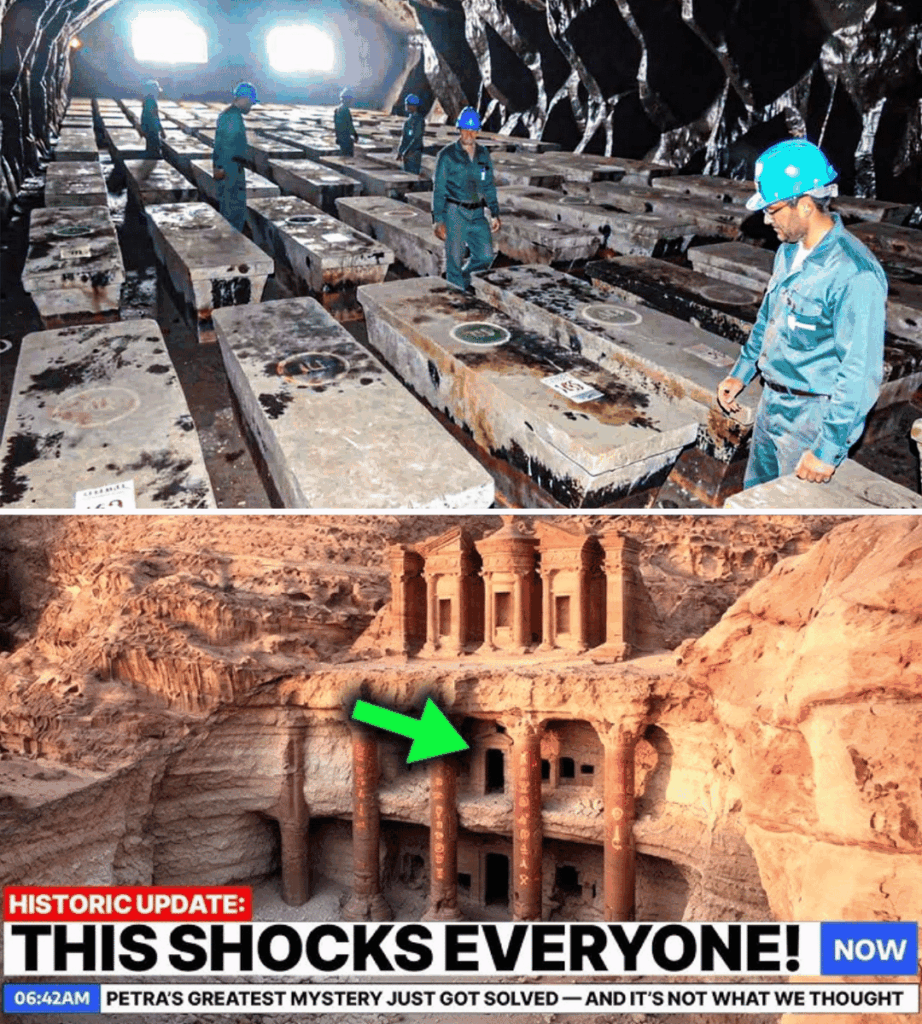
Archaeologists have uncovered a vast, sealed chamber beneath Petra’s iconic Treasury, revealing skeletal remains and an ancient containment system that defies modern engineering understanding. This explosive discovery flips centuries of assumptions about Petra, exposing a hidden purpose behind its most famous monument—designed not to honor the dead, but to imprison them forever. For over two millennia, Petra’s Treasury—a towering, ornate facade carved directly from sandstone cliffs—was celebrated as a marvel of ancient craftsmanship and presumed tomb. Now, the longstanding belief that its secrets were fully known is shattered by the revelation of a vast underground chamber concealed directly beneath it, sealed deliberately and undisturbed until now. This chamber, detected through groundbreaking non-invasive scans after repeated denial of excavation permits, contains densely packed skeletal remains, evidence of confinement rather than ceremonial burial. Archaeologists’ hand excavation revealed a thick black liquid seeping from the underground vault—a mysterious, warm 𝓈𝓊𝒷𝓈𝓉𝒶𝓃𝒸𝑒 indicating airtight sealing and centuries of organic decomposition. Petra’s construction by the Nabateans was an exercise in permanent design, cutting rooms and monuments into the rock itself with no margin for error. The Treasury’s strategic position at Petra’s entrance and exact placement above this vault suggests a deliberate architectural choice acting as a massive lock, keeping what lies beneath contained and out of sight. The physical narrow entrance to Petra funnels visitors directly to the Treasury, ensuring no bypass of this monumental facade. But beneath it, the recently excavated chamber doesn’t resemble the rest of Petra’s known burial spaces. Instead, its chaotic pile of human remains, absence of grave goods, and airtight confinement points to a chilling function far from honor or remembrance. Local oral histories long spoke of hollow sounds and cautious behavior on the ground in front of the Treasury, which skeptics dismissed until now. The forced exclusion of excavation beneath the Treasury’s forecourt sparked frustration for decades, but advanced ground-penetrating radar, resistivity surveys, and magnetometry eventually identified a clear, rectangular structural anomaly aligning precisely with the Treasury’s weight above. The subsequent, tightly controlled permission to excavate was fraught with restrictions, underscoring official concern about disturbing the site. When archaeologists finally broke ground, the sudden release of the black, mineral-rich liquid shocked the team, requiring immediate safety protocols. Chemical analysis confirmed the liquid’s long-term isolation and sealed origin. Inside the sealed cavern, experts found no ritualistic indicators—no offerings or personalized positioning of bodies. Instead, skeletal remains showed signs of compression and trauma consistent with tight, forced enclosure. This stark arrangement, combined with the chamber’s inward-sloping floor and restricted airflow, suggested a horrifying purpose: containment through architecture. Beyond the physical attributes, the Treasury’s role must now be reconsidered. Rather than a mere tomb or treasury in the traditional sense, it functions as an enormous, weighty cap that ensures prolonged isolation of what lies beneath. The deliberate architectural integration of chamber and monument reveals unprecedented Nabatean design precision and intent to imprison. This discovery raises urgent questions about who was kept sealed below, why, and under what circumstances the Nabateans engineered such a lock. Ongoing DNA and chemical analyses aim to identify origins of the remains, yet the rationale behind such extreme concealment remains elusive, challenging historians and engineers alike. Authorities maintain strict control over further work at the site, balancing archaeological inquiry with preservation and public safety. Although the full story of the sealed chamber is still unfolding, this breakthrough irrevocably changes our understanding of Petra, introducing a grim subterranean narrative hidden beneath its celebrated facade. The Treasury now stands as a dual symbol—earthbound wonder to visitors and silent sentinel over a buried secret centuries in the making, confounding modern engineering and historical comprehension as researchers race to unveil what ancient hands deliberately locked away. Source: YouTube

28 April 2026
A groundbreaking discovery has sent shockwaves through historians worldwide: a 100-year-old full-color Civil War photograph featuring Abraham Lincoln and a mysterious figure long erased from history has been uncovered. Experts reveal hidden messages and a covert presidential network that may rewrite America’s most pivotal moments. April 14th, 1865, dawned with Lincoln unusually buoyant, a detail freshly illuminated by this astonishing photograph. Unlike all known images of the era, captured solely in stark black and white, this vivid color photograph depicts Lincoln standing amidst Union officers in remarkably precise natural hues. The revolutionary nature of the image demanded immediate scrutiny. Experts initially greeted the photo with disbelief. George Cramer, a leading Civil War photographic historian, first suspected fabrication. However, exhaustive scientific testing confirmed the colors were embedded organically, using 19th-century dyes like beetroot and indigo, embedded directly into the emulsion—a process decades ahead of its time and previously undocumented. This photograph’s authenticity shattered traditional historical assumptions. Its perfect preservation across a century defies the rapid fading typical of early photographic materials. The presence of Lincoln and General Ulysses Grant situates this image at a momentous historical crossroads—just days after Confederate surrender—yet it concealed more than meets the eye. Central to this revelation is a previously unknown figure standing between Lincoln and Grant. Unlike the opulent officers flanking them, this man wore a plain, insignia-free uniform. His calm, purposeful expression and unadorned attire hinted at a secretive role, sparking intrigue that intensified when the photo’s finder recognized him as her ancestor, William Donovan. William Donovan’s identity reignited forgotten narratives. Official records declared him missing in action on April 6th, 1865, three days before the surrender. His documented disappearance starkly conflicted with his clear appearance in the photograph, casting doubt on historical accounts and implying a deliberate erasure from public knowledge. The photograph’s discovery originated in a dusty attic, where Claire Donovan uncovered a weathered album containing this impossible image. Her personal connection to William Donovan drove a meticulous investigation that uncovered startling contradictions between archival military documents and tangible photographic proof, exposing gaps in the official story. A surviving letter from Donovan demanded destruction of the photograph, warning it “was never meant to be kept.” This chilling missive suggested the image held dangerous secrets, hinting at covert missions and hidden warnings sewn into Donovan’s uniform—a uniform with mysterious patches bearing the letters “PEC,” unraveling a clandestine protective network. Further examination revealed “PEC” signified the Presidential Escort Committee, an undocumented secret unit assigned directly by Lincoln. This elite group operated outside formal military hierarchy, charged with protecting the president in absolute secrecy during the war’s final, volatile days—a revelation that recasts Donovan’s role from medic to silent guardian. Supporting documents unearthed from War Department archives included cryptic memos referencing Donovan’s covert reassignment per “Al’s” orders—Al being a familiar nickname for Lincoln. Such evidence reveals an invisible command structure functioning parallel to public military operations, maintaining the president’s safety through unsanctioned channels. Additional forensic analysis spotlighted an embroidered message beneath Donovan’s uniform lapel: “Target verified. Stand until April 14th.” This haunting phrase refers ominously to the date of Lincoln’s assassination, implying Donovan’s mission was a direct response to a known, imminent threat—a clandestine countdown to the president’s fatal night. Historians and scientists debated these cryptic messages, concluding “Target verified” confirmed Lincoln as a marked individual, while “Stand until” indicated a fixed operational timeframe for Donovan’s protective watch. This new intelligence reshapes understanding of security measures preceding one of America’s darkest days, revealing a secret struggle against forces unknown. The absence of Donovan in official rosters and aid lists appears deliberate, reflecting a systematic erasure to protect the covert network, and possibly cover-up circumstances surrounding Lincoln’s assassination. This hidden narrative challenges the integrity of widely accepted Civil War histories and exposes how power and secrecy intertwine in shaping historical memory. Claire Donovan’s relentless pursuit of truth has brought this shadowy chapter into the light. The discovery not only honors her ancestor’s forgotten sacrifices but also compels historians to question how many other vital stories remain buried beneath layers of official omission and forgotten archives. This revelation transforms our comprehension of the Civil War’s final moments, exposing a clandestine presidential security apparatus that operated in silence, shielding Lincoln beyond visible ranks and public knowledge. It underscores the fragility of historical record-keeping and the potency of family legacies in unveiling concealed truths. The intricate stitching, hidden messages, and unprecedented coloration of the photograph collectively tell a story of trust, duty, and concealed operations at the nation’s highest level. These findings demand a reevaluation of the era’s documented events, highlighting the intersections of technology, espionage, and historic preservation. As scholars sift through emerging evidence, the legacy of William Donovan reminds us that history is not static but a complex tapestry woven with secrets, sacrifices, and censored realities. His silent role as protector reflects countless others whose contributions remain invisible but deeply impactful. The photograph stands as a testament to extraordinary innovation and profound human stories, merging technological mystery with emotional resonance. It invites a broader dialogue on how history is recorded, remembered, and at times, deliberately rewritten to suit prevailing narratives. …

28 April 2026
Mesmo sem estar na casa mais vigiada do país, Diogo Maia continua debaixo dos holofotes. Este domingo, estreou mais um ‘Secret Story – Desafio Final’, apresentado por Cristina Ferreira, e Ariana foi uma das…

28 April 2026
A colossal iceberg measuring 209 square miles has ruptured from Antarctica’s George VI Ice Shelf, revealing a hidden, thriving ecosystem sealed in darkness for over 500 years. This groundbreaking discovery challenges known science and provides unprecedented insight into life powered by cosmic radiation beneath the ice. On January 13th, 2025, a massive rift tore through one of Antarctica’s oldest ice shelves, dislodging iceberg A-84, an immense 30 km by 17 km slab. This calving revealed a stretch of ocean floor submerged for half a millennium, previously locked away beneath 150 meters of solid ice. Scientists quickly rallied, deploying the ROV Subastian mere days after the iceberg’s departure. What initially was expected to be a barren seafloor stunned observers with signs of a dense, complex ecosystem in utter darkness. The footage streamed live, capturing the astonishment of experts worldwide. At 215 meters depth, towering pale sponges, growing up to two meters tall, dominated the landscape. These sponges, requiring centuries of steady growth, challenged previous assumptions about life’s persistence without sunlight or traditional food sources. Interwoven among these sponges were vibrant communities of brittle stars, tiny shrimp, and ice fish—creatures adapted to the harsh, oxygen-poor Antarctic conditions. These fish, lacking hemoglobin, flaunt transparent blood propelled by oversized hearts, resembling lifeforms from another world. Deeper down, between 500 and 1,000 meters, vast forests of cold-water corals formed intricate habitats, sheltering entire fish schools. Some coral colonies date back hundreds of years, silently accumulating biomass beneath a frozen roof longer than modern civilizations have existed. The spectacle didn’t end there. At 1,150 meters depth, a pale octopus blinked bioluminescent pulses into the submersible’s camera—an advanced communication method evolved in complete isolation, revealing behavioral complexity in the abyss. Then emerged the phantom jellyfish, Stygiomedusa gigantea, an elusive species rarely seen on record. Its bell spanned over a meter wide, trailing ten-meter-long arms, a ghostly leviathan moving gracefully across the camera’s view, silencing the entire control room. More than 1,900 specimens were collected during the 12-day expedition, including six newly identified species. Discoveries ranged from zombie worms to unknown sea stars and crustaceans, rewriting scientific expectations about Antarctic biodiversity under thick ice. Scientists are grappling with the critical question: how does this ecosystem sustain itself? Devoid of sunlight, starving of marine snow, and sealed off for centuries, conventional biological models fall short of explanation. The answer lies in a startling process revealed by chemical analysis. Elevated levels of molecular hydrogen were detected in the cavity’s waters. This hydrogen production stems from radiolysis—the splitting of water molecules by cosmic radiation and natural radioactivity from bedrock, generating energy independently of sunlight or organic input. Radiolysis, usually negligible on Earth’s surface, becomes a dominant life-sustaining force in this sealed environment. Microbial mats harness this hydrogen, converting inorganic energy into organic matter, forming the foundation of a unique food web for larger organisms. This energy mechanism, powering life in total darkness for over 500 years, is a paradigm-shifting discovery, offering compelling analogues for extraterrestrial biology. NASA’s Europa Clipper mission, now en route to Jupiter’s moon Europa, finds this Antarctic revelation crucial. Europa possesses a massive subsurface ocean beneath an ice crust bombarded by intense radiation—conditions ideal for radiolysis-driven ecosystems, mirroring A-84’s hidden world. These findings shift the astrobiological paradigm, turning theoretical possibilities into documented realities. Further, Saturn’s moon Enceladus, known for its water plumes rich in organic compounds, also emerges as a promising target influenced by similar radiolytic chemistry, broadening the scope of potential habitable environments in our solar system. Back on Earth, the George VI Ice Shelf is deteriorating rapidly. Satellite data shows thinning at half a meter annually with destabilizing melt patterns accelerating since the devastating 2019-2020 melt season, signaling imminent ice loss and further habitat exposure. The critical role of ice shelves as “brakes” holding back inland glaciers cannot be overstated. Their collapse accelerates glacial flow into oceans, contributing significantly to global sea level rise—a threat exponentially worsened by ongoing climate change. Scientists stress that each calving event like A-84 opens a fleeting window to study ecosystems immediately before they dissolve. Exposure to surface water and invasive species inevitably destroys the delicate conditions sustaining these ancient habitats. …

28 April 2026
Breaking news has emerged revealing the tragic deaths of Hollywood legend Gene Hackman and his wife Betsy Arakawa inside their Santa Fe home. Newly released DNA evidence and bodycam footage expose the heartbreaking truth: Betsy succumbed to a rare, fatal virus, and Gene wandered alone in confusion for a harrowing week before dying of heart failure. For two weeks, the world was unaware that Gene Hackman and his wife Betsy had passed away quietly in their Santa Fe mansion. The silence ended only when a longtime contractor’s concern led to a 𝓈𝒽𝓸𝒸𝓀𝒾𝓃𝑔 discovery that shook Hollywood and left investigators grappling with an unimaginable scene. Deputies arriving at the home on February 26th were met with a chilling tableau: an unlocked door, no signs of forced entry or theft, yet two bodies lying in separate rooms. The couple’s beloved dog was found dead, trapped inside a crate by Betsy’s side, adding to the heartbreak unfolding within those walls. Initial speculation gave way to grim reality as officials examined the scene. Pills scattered near Betsy’s body, a space heater close by, and signs of mummification revealed the extent of time that had passed since their deaths. Gene was discovered collapsed near the kitchen, his walking cane and sunglasses beside him. The critical breakthrough came from Gene’s pacemaker, a device silently documenting his deteriorating heart. It revealed his final heartbeat on February 18th, followed by abnormal rhythms and then silence. This timeline placed his death days after Betsy’s, intensifying the horror of his lonely last week alive. Betsy’s death was traced to Hantavirus pulmonary syndrome, a rare but deadly disease transmitted by deer mice prevalent in New Mexico. Investigation uncovered evidence of rodent infestation on the property, providing the crucial missing link behind this devastating diagnosis that few had ever encountered. Betsy had been the caretaker, managing Gene’s medical needs and daily life with meticulous emails and errands. Suddenly, her brief and then silent communications raised alarm. Her last public movements showed a woman still active but unaware they were her final days. Despite efforts to contact her, Betsy vanished from communication on February 12th after searching symptoms online and calling a concierge medical clinic. Her sudden silence marked the start of Gene’s isolation in the house, where advanced Alzheimer’s likely robbed him of understanding what had happened. The medical examiner revealed that Gene’s stomach was empty, his body starved yet hydrated, implying he survived by drinking water but ceased eating in the absence of care. Betsy’s death dismantled the entire system that kept him going, leaving him vulnerable and trapped in confusion. The couple’s dog Zenna died from dehydration inside her recovery crate during the same tragic period. Trapped and neglected, Zenna’s fate underscored the devastating consequences of their untimely deaths and the silence that held the household in its grip. Longtime contractor Jesse Kesler, who had worked on their home for 16 years, dispelled rumors of secret tunnels or hidden chambers. His firsthand knowledge confirmed there were none, attributing this tragedy not to mystery but to the silent unraveling of a private life disrupted by illness. The revelation overturned the wild conspiracy theories that swept social media after news of their deaths. Instead, it painted a somber portrait of vulnerability, aging, and the cruel effect of a rare disease combined with Alzheimer’s on a once vibrant Hollywood icon. Hollywood paid tribute to Gene Hackman’s extraordinary legacy. Legends including Clint Eastwood and Morgan Freeman expressed profound sorrow, highlighting the loss of a giant whose extraordinary career spanned decades, touching every facet of the film industry and countless hearts. Estate proceedings began amid the emotional aftermath. With Betsy passing first, the couple’s $80 million estate entered a complex probate involving their children and family representatives. Items from Gene’s career were swiftly auctioned, but the greatest legacy remained the tragic story behind their final days. Gene and Betsy were laid to rest together in an unmarked grave, a symbol of their lifelong bond. In death, they were granted the privacy Gene valued during his life, a poignant end to a story marked by silence, love, and heartbreaking solitude. This tragedy is a stark reminder of how even the most private figures can face devastating battles behind closed doors. It is not mystery but the raw truth of human fragility and love that resonates, leaving us with haunting questions about care, connection, and the passage of time. The Santa Fe investigation closes a chapter long shrouded in silence, but it opens wider conversations on rare diseases, elder care, and the silent struggles endured by those in the shadows. Gene Hackman’s story, though tragic, will endure as a testament to dignity amid decline. As the world remembers a Hollywood titan, it must also reflect on the fragility beneath fame and fortune. Gene Hackman’s final chapter is not just about loss but about the importance of compassion and vigilance in the face of silent suffering right next door. Source: YouTube
26 April 2026
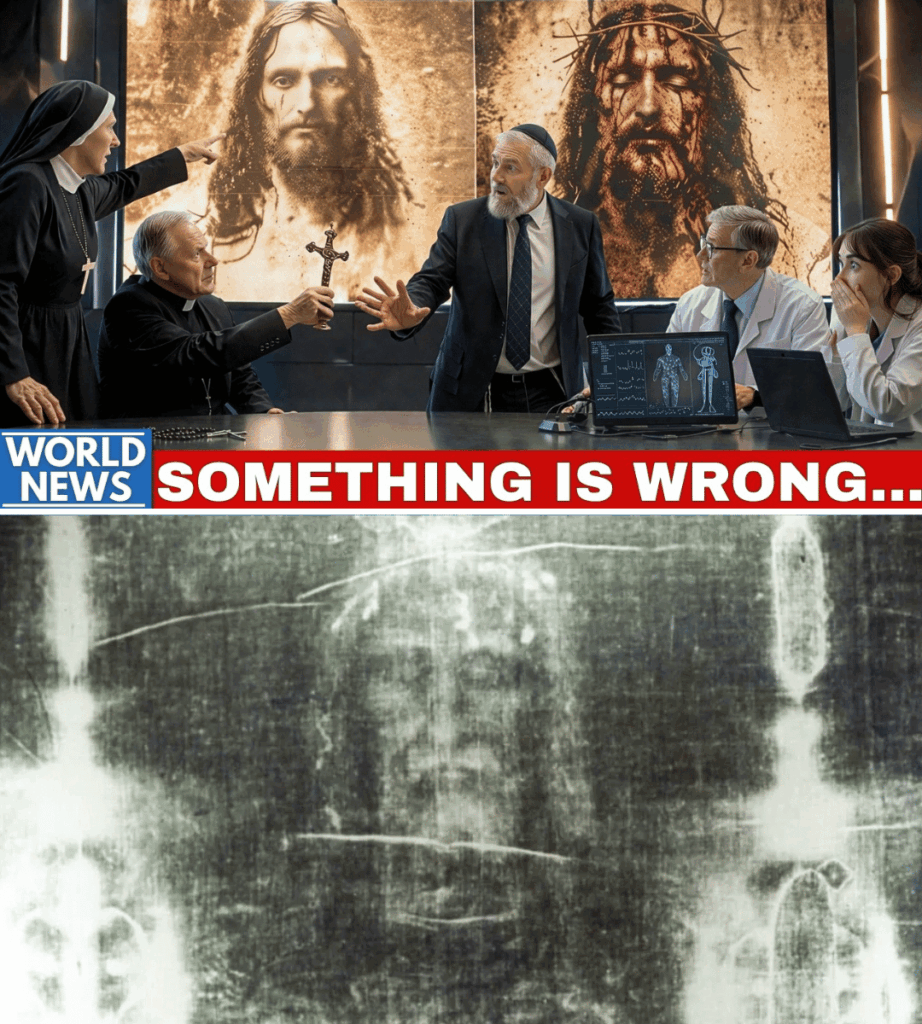
For 46 relentless years, Barry Schwartz, a skeptical Jewish photographer, challenged the truth behind the Shroud of Turin, the world’s most infamous religious relic. His unexpected and groundbreaking conclusions debunk the simplistic dismissal of the cloth as a medieval 𝒻𝒶𝓀𝑒, reshaping one of history’s longest controversies with unyielding scientific scrutiny. The Shroud of Turin, purportedly the burial cloth of Jesus Christ, has been mired in conflict for centuries. Is it a miraculous artifact or an elaborate 14th-century forgery? Barry Schwartz entered this storm in 1978 as an outsider—a Jew with no emotional ties to Christianity, tasked merely with photographing the shroud scientifically and dispassionately. Initial observations stunned Schwartz. While expecting clear signs of fraud—paint, brush strokes, or obvious trickery—the faint, almost withdrawn image refused to conform to known medieval art techniques. The cloth’s negative image composition and unusual characteristics defied straightforward explanations and planted lingering doubts about conventional dismissal. Yet, the blood stains on the fabric troubled Schwartz. Unlike what is expected of aged blood—darkening, browning over centuries—the blood on the shroud remained conspicuously red. This inconsistency stood as a bulwark against claims of authenticity and fueled Schwartz’s persistent skepticism through nearly two decades of study. Historical context added fuel to the ongoing debate. In 1898, Secondo Pia’s photograph revealed a startling negative image, unsettling scholars who struggled to explain why a medieval forger would craft an image only legible via photographic inversion—knowledge impossible for the era. This anomaly opened a Pandora’s box of questions. Scientific investigations in 1976 intensified these mysteries. Researchers John Jackson and Eric Jumper used a VP8 image analyzer revealing surprisingly accurate three-dimensional details in the shroud’s image—more precise than typical paintings or photographs. This challenged the assumption that the shroud was a simple medieval fabrication. As Schwartz joined the investigative team in 1978, he encountered a technical enigma compounded by chemical and anatomical evidence. Testing revealed blood consistent with genuine human biology, with an unusual sequence causing blood stains to precede the body image—contradicting typical artistic layering and indicating a forensic complexity beyond forgery. The anatomical details of the wounds further complicated narratives. Nails appeared through the wrists, consistent with modern forensic studies rather than traditional palm crucifixion imagery, and the hidden thumbs suggested nerve damage. Such precision defied typical medieval artistic conventions and lent the image unsettling realism and medical authenticity. Controversy intensified after the 1988 radiocarbon tests seemingly dated the cloth to the 13th or 14th century, reinforcing claims of forgery. These results were widely publicized and accepted as conclusive, delivering a critical blow to authenticist positions. However, many experts later questioned the sample’s provenance and the reliability of this carbon dating. Raymond Rogers, a chemist initially skeptical of authenticity, analyzed fibers from the carbon-dated sample and found evidence suggesting the tested section was from a repaired or contaminated patch. His findings cast doubt on the sample’s validity, reopening debates about the cloth’s true age and undermining the finality of the 1988 verdict. Barry Schwartz observed a troubling trend: the public and media craved simple answers, yet the shroud consistently resisted clean closure. Complex evidence, ranging from forensic oddities to chemical nuances, prevented definitive conclusions. The shroud remained a labyrinthine puzzle that refused to be solved by conventional thinking or scientific consensus. One critical breakthrough arrived in the mid-1990s. Blood chemist Alan Adler explained the perplexing red bloodstains with the presence of bilirubin—a compound elevated during severe trauma. This discovery reconciled the persistence of red blood on the shroud with medical reality, eroding the last major scientific objection Schwartz had held against authenticity. Despite this, Barry Schwartz did not embrace religious conversion or become a crusader for the shroud. He remained steadfastly Jewish and scientifically grounded. His transformation was not spiritual but intellectual; confronted with irrefutable evidence, he assumed the role of persistent custodian, defending the rigor of inquiry rather than faith. Schwartz’s dedication culminated in the foundation of shroud.com in 1996, which became an unparalleled archive for research, photographs, and scientific debate on the shroud. Over decades, he preserved the complexity and controversy surrounding the relic, highlighting that scientific truth often dwells in ambiguity—not simplistic verdicts. The shroud’s physical condition also intrigues experts. Despite a catastrophic 1532 fire damaging much of the cloth, the mysterious image survived largely intact, defying expectations. Common pigments or dyes would have likely been destroyed, challenging assumptions of a medieval artist’s handiwork and fueling speculation about its true origin. Efforts to replicate the shroud’s image have repeatedly fallen short. Experiments produce partial effects but fail to mimic all characteristics: surface superficiality, tonal subtlety, and complex chemical properties remain unmatched. This elusive image mechanism deepens the enigma and highlights the limits of current scientific understanding. Throughout his 46-year journey, Barry Schwartz embodied scientific integrity and relentless skepticism. Rather than capitulate to easy answers, he confronted evidence that defied neat categorization, forcing reconsideration of the shroud’s story and challenging entrenched positions on both sides of the debate. Barry Schwartz passed away in 2024, leaving behind a legacy as a rare figure in religious controversy: a skeptic transformed not by faith, but by the persistent weight of unresolved evidence. His life underscores the enduring enigma of the Shroud of Turin and the unrelenting search for truth.…
26 April 2026
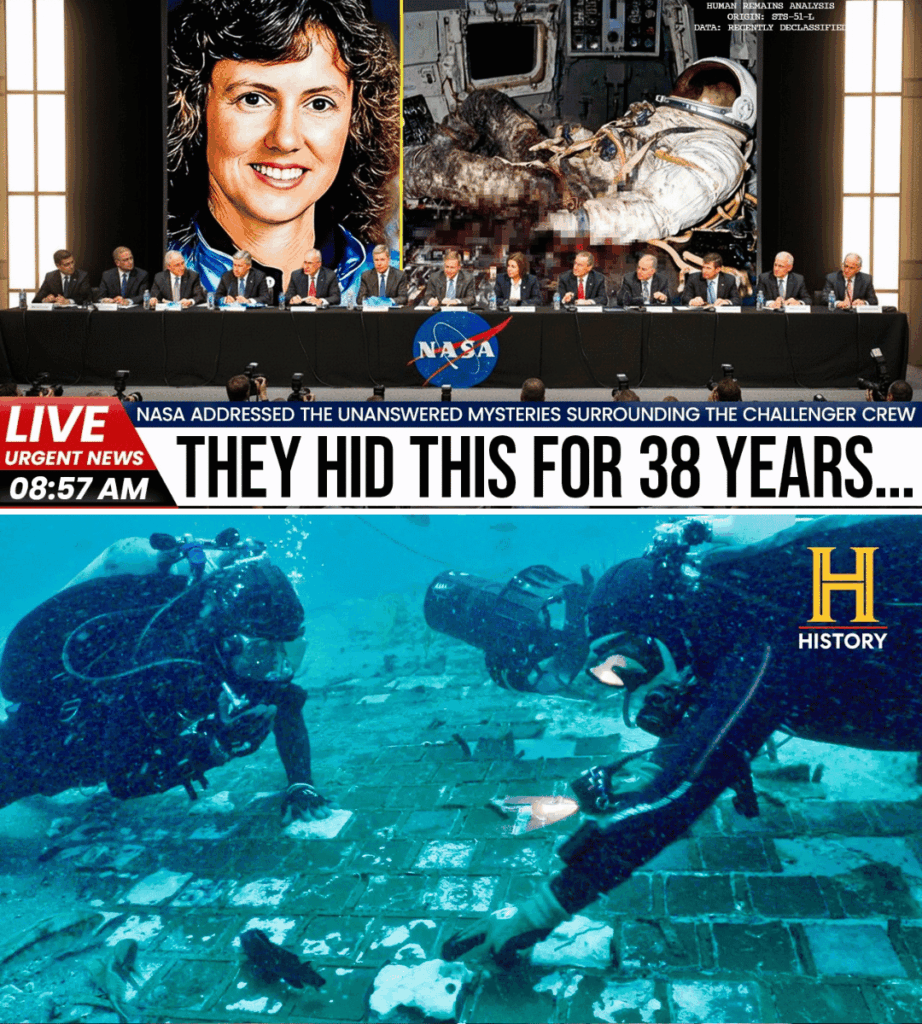
In a chilling revelation, the long-hidden fate of the Challenger disaster crew has been brought to light through a painstaking oceanic recovery mission that uncovered the crew compartment, their remains, and the devastating truth behind the 1986 explosion. This breakthrough reshapes our understanding of one of NASA’s darkest moments. On January 28, 1986, the world watched in stunned silence as the Challenger space shuttle erupted into a fireball just 73 seconds after liftoff. Seven astronauts—including Christa McAuliffe, the nation’s first teacher in space—perished in the catastrophic failure. The tragedy left millions searching for answers about the crew’s fate. For decades, the story behind the crew’s remains remained cloaked in mystery and sorrow. Now, new details emerge from the deep Atlantic Ocean, where Navy divers and recovery teams uncovered the crew compartment amid scattered debris. This grim discovery marks a turning point in NASA’s investigation and historical record. The search operation was staggering in scale—spanning weeks, involving hundreds of specialists, and using sonar to identify pieces on the ocean floor. Early findings revealed tens of tons of shuttle wreckage, but the crew compartment, the vehicle’s heart containing the lost astronauts, was not found until over a month later. On March 7, 1986, sonar detected a large, irregular shape buried in sand eighteen miles off Cape Canaveral. Divers cautiously descended through icy, murky waters, revealing the shattered crew cabin. Though crushed and twisted, it remained largely intact, bearing silent witness to the astronauts’ final moments. The recovery of the crew compartment shifted the mission from salvage to solemn responsibility. Removed under strict security, the cabin was transported to Kennedy Space Center for detailed forensic examination. Inside, investigators confronted the haunting reality of the crew’s last moments and the catastrophe’s human cost. NASA’s investigation confirmed that the cabin separated intact during the shuttle’s breakup, then fell nearly three minutes before hitting the ocean at speeds exceeding 200 miles per hour. The impact forces were unsurvivable. Evidence suggested the astronauts experienced a brief window of consciousness amid the disaster’s chaos. Handling the crew remains was an emotionally devastating task. The fragile fragments were meticulously documented and analyzed in a secure medical facility, where identification relied on dental records and skeletal features—long before DNA was routine. Families were notified quietly, their grief guarded with utmost respect. By April 19, 1986, all seven astronauts had been officially identified. The discovery profoundly affected investigators who grappled with the possibility that some crew members may have regained brief awareness after the shuttle’s breakup. The tragedy bore an even darker, human dimension. Remaining fragments that could not be individually identified were cremated together. On May 20, 1986, a private and somber ceremony at Arlington National Cemetery honored the Challenger crew. Their co-mingled ashes were laid to rest beneath a simple monument, a symbol of national mourning and cherished sacrifice. The disaster’s cause was scientifically traced to a small but critical failure: the right solid rocket booster’s O-ring seals did not function properly in freezing temperatures. Cold weather had compromised the o-rings, allowing hot gases to escape, ultimately igniting the external fuel tank and destroying Challenger. The Rogers Commission, formed by President Reagan, revealed that engineers had warned NASA of the O-ring’s vulnerability to cold but were ignored in the rush to launch. Their findings 𝓮𝔁𝓹𝓸𝓼𝓮𝓭 not only technical flaws but systemic failures—communication breakdowns and flawed management decisions leading to the catastrophe. The commission’s recommendations forced NASA into a reckoning. The shuttle program was grounded for over two years while booster joints were redesigned and safety protocols overhauled. NASA embraced a culture of transparency and caution, inaugurating new safety offices and empowering engineers to voice concerns. In 1988, space shuttle Discovery’s launch signaled NASA’s return to flight, accompanied by tributes honoring the Challenger crew. Astronauts flying afterward carried the legacy of their fallen colleagues. Christa McAuliffe’s story continued to inspire educational programs, preserving the spirit of exploration that motivated the mission. Kennedy Space Center hosts the reconstructed shuttle remains, serving both as an investigative tool and a memorial. The crew’s legacy remains deeply embedded in NASA’s culture, reminding every new mission of the cost of failure and the priceless value of human life in the relentless pursuit of space. Each January 28, NASA staff and families remember with quiet ceremonies reading the Challenger crew’s names aloud. The underwater remains, still housed securely, stand as an eternal reminder of tragedy, honor, and the vital lessons seared into America’s aerospace history. The Challenger disaster 𝓮𝔁𝓹𝓸𝓼𝓮𝓭 vulnerabilities in technological ambition and institutional oversight, leaving an indelible mark on national memory. Yet it also sparked reform and reverence—a commitment that such a loss must never recur in the quest to explore beyond our Earthly bounds. As we honor those who perished on that fateful morning, their courage, and the lessons learned remain guiding stars for future generations. The recovered crew compartment, and the stories it revealed, transform tragedy into an enduring call for vigilance, respect, and relentless dedication to progress. Source: YouTube

26 April 2026
In a groundbreaking discovery, scientists have opened a Viking ship buried in southern Norway for over 1,200 years, unearthing remarkably preserved bodies and a wealth of artifacts that expose a dark, previously unknown ritual involving sacrifice, violence, and mysterious social dynamics, shaking centuries-old beliefs about Viking society. On a quiet Norwegian farm in 1904, a farmer’s routine task revealed an extraordinary secret: beneath the earth lay the Osberg ship, a Viking vessel buried around 820 AD. The ship, astonishingly intact, was exquisitely crafted, featuring a serpent-carved prow and built from durable oak with iron rivets, preserving Nordic seafaring artistry. Buried deliberately in a trench and layered with peat and clay, the ship remained untouched for 1,200 years in an oxygen-starved environment that halted decay. This exceptional preservation baffled archaeologists, unveiling not just a ship but a cryptic insight into Viking burial customs and the society that created them. Inside the ship lay a wooden burial chamber laden with intricately carved sleighs, a rare wooden cart, woven tapestries, cooking and farming tools, and a carved bed, indicating a burial of immense status. Surrounding the ship were the remains of 15 horses, six dogs, and two cows—sacrifices symbolizing wealth and power in Viking culture. At the heart of this burial were two female skeletons, initially identified as queens or noblewomen based on their grave goods. One was middle-aged, the other elderly, both draped in fine fabrics, potentially including imported silk. For over a century, these “Osberg Queens” symbolized Viking female authority and regal prestige. Scientific technology’s evolution has now revolutionized our understanding of this ancient grave. Since 2007, researchers have applied DNA analysis, isotope testing, and CT scans, revealing startling contrasts to old assumptions. These women bore signs of physical hardship, trauma, and malnutrition, challenging the narrative of comfort and privilege. DNA results established that the women were unrelated, and isotope studies showed one consumed a heavily marine-based diet atypical of elite Vikings, while the other suffered severe arthritis. CT scans uncovered healed but serious skull fractures, evidencing past interpersonal violence, not the peaceful death once imagined. The revelation of trauma and deprivation amid riches suggests the women were likely sacrificial victims or lower-status individuals enmeshed in deadly rituals, rather than noble rulers. This insight aligns with medieval Arab accounts describing slave sacrifices accompanying chieftains to the afterlife, now supported by archaeological evidence. The darker truths hidden in the Osberg burial echo throughout Viking ship graves. The contrasting discovery at the burned Michaelbust ship, destroyed by fire and stripped of personal items, reveals a burial marked by violence and erasure, showing diverse—and often brutal—ritual practices within Viking society. Michaelbust’s wreckage, unearthed in 1874, was reduced to charcoal layers and shattered weapons, lacking the honor and symbolism typical of Viking burials. This violent desecration starkly contrasts with Osberg’s rich tableau, exposing the complex social realities and possibly conflicted statuses of those interred in Viking ships. Ship burials have been a potent symbol of power and status across cultures for centuries, from the Anglo-Saxons’ Sutton Hoo ship to Egyptian pharaohs’ funerary practices and Chinese Han dynasty tombs. These vessels represent the deceased’s journey to the afterlife and earthly rank, intertwining belief with societal hierarchy. Vikings viewed death as a voyage to one of nine realms, including Valhalla and Freya’s Hall, each reserved for distinct followers. Ship burials reflected this worldview, intended to transport the dead with honor and serve as lasting symbols of maritime prowess and social standing in life and death. This discovery forces a reevaluation of Viking history and mythology. The Osberg burial’s revised interpretation reveals the complexity and nuance of Viking social structures, challenging the glorified image of noble Vikings and exposing the grim realities behind ceremonial rituals, including sacrifice, suffering, and social stratification. Modern scientific methods have 𝓮𝔁𝓹𝓸𝓼𝓮𝓭 the limitations of early 20th-century archaeology, which was constrained by bias and scarce technology. Today’s interdisciplinary research fosters a deeper understanding of who the Vikings were—fierce warriors, ritualistic leaders, but also individuals subjected to hardship and violent customs. The evidence from the Osberg ship shows that wealth and material display in Viking burials do not necessarily correlate with the deceased’s lived experience or social status, implicating rituals of power that included punishment or sacrifice as vital components of Viking funerary traditions. As archaeologists continue to study other Viking ship graves, they must navigate these new findings, questioning decades-old assumptions and seeking truth within complex and often contradictory evidence. The Osberg ship has become a symbol of evolving historical narratives shaped by advancing technology and critical reassessment. The story of the Osberg burial deepens our understanding of Viking culture, revealing that beneath the grandeur lay shadowy practices and social tensions. These insights compel historians to expand their perspectives on death, honor, and power in early medieval Scandinavia, redefining Viking legacy for future generations. This unprecedented blend of preservation, science, and history grants a rare glimpse into the Viking world’s darker rituals and societal complexities. The unveiling of this ancient ship and its haunting secrets amplifies our fascination with Viking civilization, challenging cherished myths with stark realities from the past. As further research unfolds, these revelations urge a reevaluation of other archaeological sites, anticipating new discoveries that may expose additional brutal rites or redefine the social dynamics long attributed to Viking age Scandinavia’s elites and their followers.…