New Analysis of Jesus’ Image on the Shroud of Turin Reveals Something Unexpected
MYSTERY DEEPENS AFTER LATEST RESEARCH ON JESUS IMAGE EMERGES WORLDWIDE
A fresh wave of global attention has been drawn to one of history’s most enigmatic artifacts after a new analysis of the image on the Shroud of Turin revealed details that researchers describe as unexpected and difficult to explain.
The study, conducted using modern imaging techniques and advanced material analysis, has reignited debates that have persisted for decades, placing the mysterious cloth once again at the center of a complex intersection between science, history, and belief.
The Shroud of Turin has long fascinated both researchers and the public.
The faint imprint of a man—bearing marks consistent with crucifixion—has led many to associate the cloth with Jesus Christ.
Yet despite centuries of study, no single explanation has been universally accepted regarding how the image was formed or when the cloth originated.
In the latest analysis, scientists employed high-resolution digital scanning combined with spectral imaging to examine the microscopic structure of the fibers.
What they found was striking: the image appears to exist only on the outermost layers of the linen threads, with no evidence of pigment, ink, or dye penetrating deeper into the fabric.
While this characteristic has been noted in earlier studies, the new research provides a more detailed and precise confirmation, raising further questions about the mechanism behind the image’s formation.
Even more surprising was the discovery of subtle variations in intensity that seem to correspond with the distance between the cloth and the body it depicts.
Researchers observed that areas of the image appear to encode three-dimensional information, allowing for the reconstruction of a relief-like representation when processed with specialized software.
This property, rarely seen in traditional artwork, has deepened the mystery surrounding the artifact.
The implications of these findings have sparked renewed discussion across multiple fields.
Some scientists suggest that natural processes—such as chemical reactions between the cloth and a decomposing body—could produce similar effects under specific conditions.
However, replicating the precise characteristics observed in the Shroud of Turin has proven extremely difficult, leaving the question open.
Others have explored the possibility that the image was created using techniques that are not yet fully understood.
Historical methods of image-making, particularly those involving light-sensitive materials or heat, are being reexamined in light of the new data.
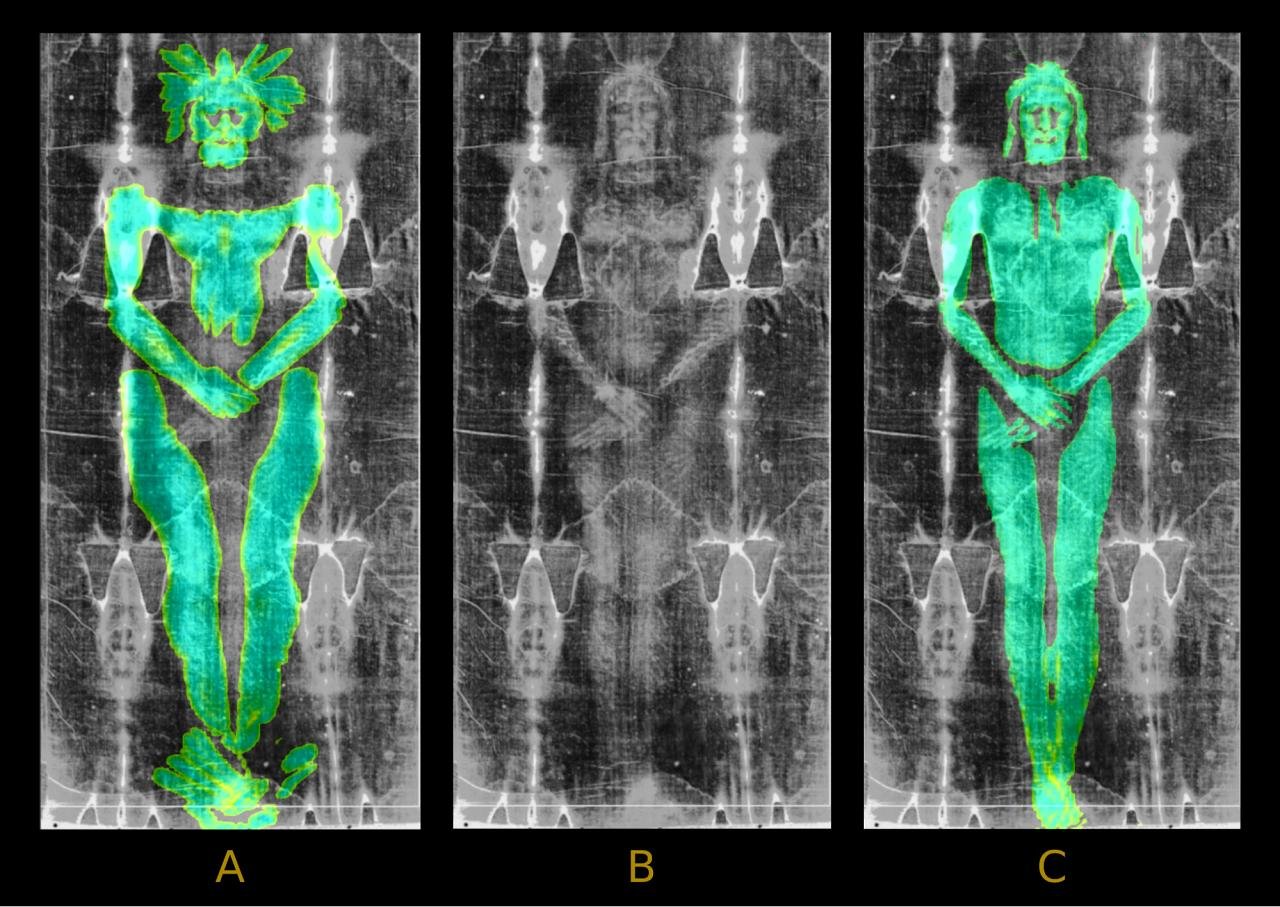
Yet so far, no proposed method has successfully reproduced all the known features of the shroud image simultaneously.
The discussion becomes even more complex when considering the results of earlier radiocarbon dating, which placed the origin of the cloth in the medieval period.
While this finding has been widely accepted, some researchers argue that contamination or repair work on the fabric could have affected the results.
The new analysis does not directly address the dating issue, but it has prompted calls for further investigation using updated techniques.
Public reaction to the study has been immediate and intense.
Supporters of the shroud’s authenticity see the findings as reinforcing the idea that the image cannot be easily explained by conventional means.
They argue that the combination of superficial image depth, lack of pigments, and three-dimensional encoding points to an origin that remains unknown.
Skeptics, however, emphasize that unusual characteristics do not necessarily imply a supernatural explanation.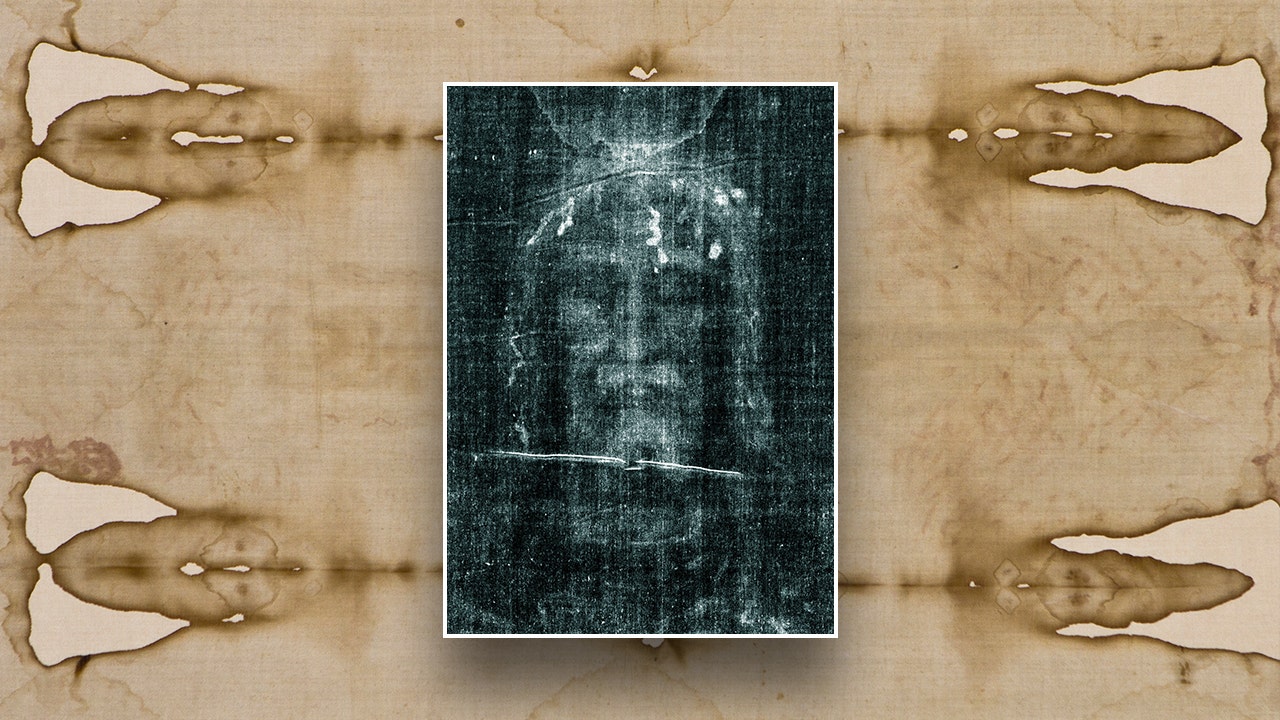
They point out that history is filled with examples of artifacts that initially appeared mysterious but were later understood through careful study.
For them, the new findings highlight the need for continued research rather than definitive conclusions.
The role of technology in this latest analysis has been particularly significant.
Advances in imaging and data processing have allowed researchers to examine the Shroud of Turin in ways that were not possible even a decade ago.
By capturing and analyzing minute details at the microscopic level, scientists are uncovering patterns and properties that challenge previous assumptions.
At the same time, access to the shroud remains limited, which presents challenges for ongoing research.
The artifact is preserved under controlled conditions, and any testing must be conducted with extreme care to avoid damage.
This has led to calls for international collaboration, bringing together experts from different disciplines to share data and insights.
Historians have also contributed to the discussion, examining the documented history of the cloth.
Records of the Shroud of Turin date back to the Middle Ages, though some believe it may have existed earlier.
Tracing its journey through time is a complex task, complicated by gaps in documentation and conflicting accounts.
Meanwhile, theologians continue to reflect on the significance of the image, regardless of its origin.
For many, the shroud serves as a powerful symbol of faith, representing themes of suffering, sacrifice, and hope.
Whether or not it can be definitively linked to Jesus Christ, its impact on religious thought and devotion is undeniable.
The broader cultural impact of the discovery cannot be overlooked.
In an era where scientific and technological advancements often dominate public attention, the enduring mystery of the shroud offers a reminder that some questions remain open.
It invites both curiosity and humility, encouraging people to explore the unknown while recognizing the limits of current knowledge.
As researchers continue to analyze the data, the story of the Shroud of Turin remains far from complete.
Each new finding adds another piece to a puzzle that has captivated humanity for centuries.
Whether future studies will provide clearer answers or deepen the mystery further is a question that continues to draw interest from around the world.
For now, the latest analysis stands as a significant development—one that challenges existing explanations and invites renewed exploration.
In the faint, enigmatic image on the cloth, scientists and believers alike see something that defies easy understanding, a silent imprint that continues to spark debate, wonder, and reflection across generations.