MYSTERIOUS ENOCH WRITINGS RESURFACE SPARKING GLOBAL DEBATE OVER ORIGINS
For centuries, it has existed on the fringes of religious tradition—referenced, debated, preserved in fragments, yet ultimately excluded from one of the most influential collections of texts in human history.
Known as the Book of Enoch, this ancient work has long been surrounded by mystery, controversy, and fascination.
Now, renewed interest in its contents is reigniting debate across scholarly, religious, and public circles, as people confront the unsettling possibility that this forgotten text may offer a radically different perspective on humanity’s past.
The Book of Enoch is not entirely unknown.
It has been studied for generations by historians and theologians, and it survives most completely in the Ge’ez language, preserved within the canon of the Ethiopian Orthodox Church.

However, it was not included in the widely recognized versions of the Bible used by most Jewish and Christian traditions.
This exclusion has often led to claims that it was deliberately “banned,” though scholars clarify that its absence is more accurately the result of complex historical processes involving authorship, theology, and canon formation.
Still, the sense of mystery remains.
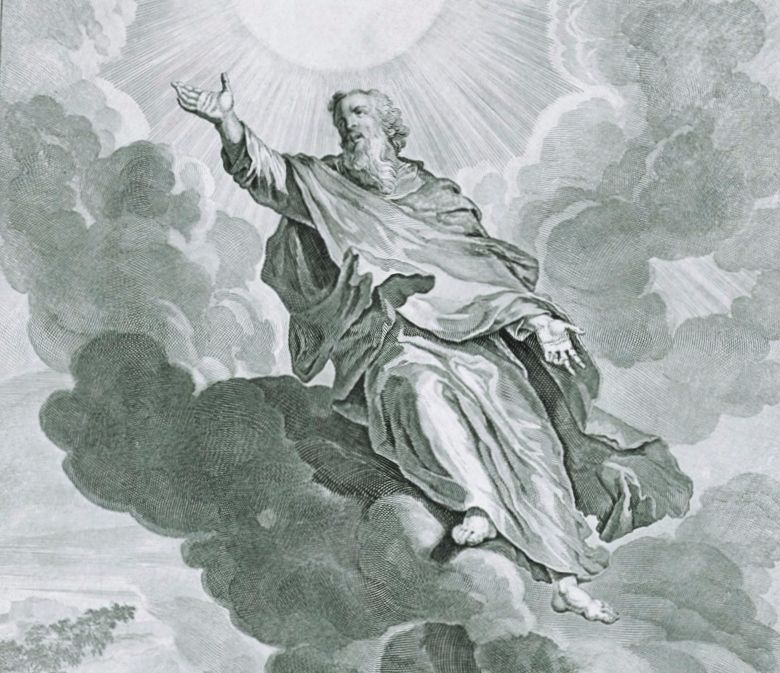
Attributed to Enoch, a figure briefly mentioned in the Book of Genesis as a man who “walked with God,” the text expands dramatically on his story.
In these writings, Enoch is depicted not merely as a righteous individual, but as a witness to cosmic events, a traveler between realms, and a recorder of knowledge that transcends ordinary human understanding.
It is this portrayal—and the vivid, often unsettling narratives that accompany it—that has captured the imagination of readers across generations.
At the center of the Book of Enoch is a story that challenges conventional interpretations of early human history.
It speaks of beings known as the Watchers—figures described as descending from the heavens and interacting directly with humanity.
According to the text, these beings shared knowledge with humans, teaching them skills and technologies that transformed their societies.
But this exchange was not portrayed as entirely benevolent.
The Watchers are said to have overstepped boundaries, leading to consequences that would alter the course of history.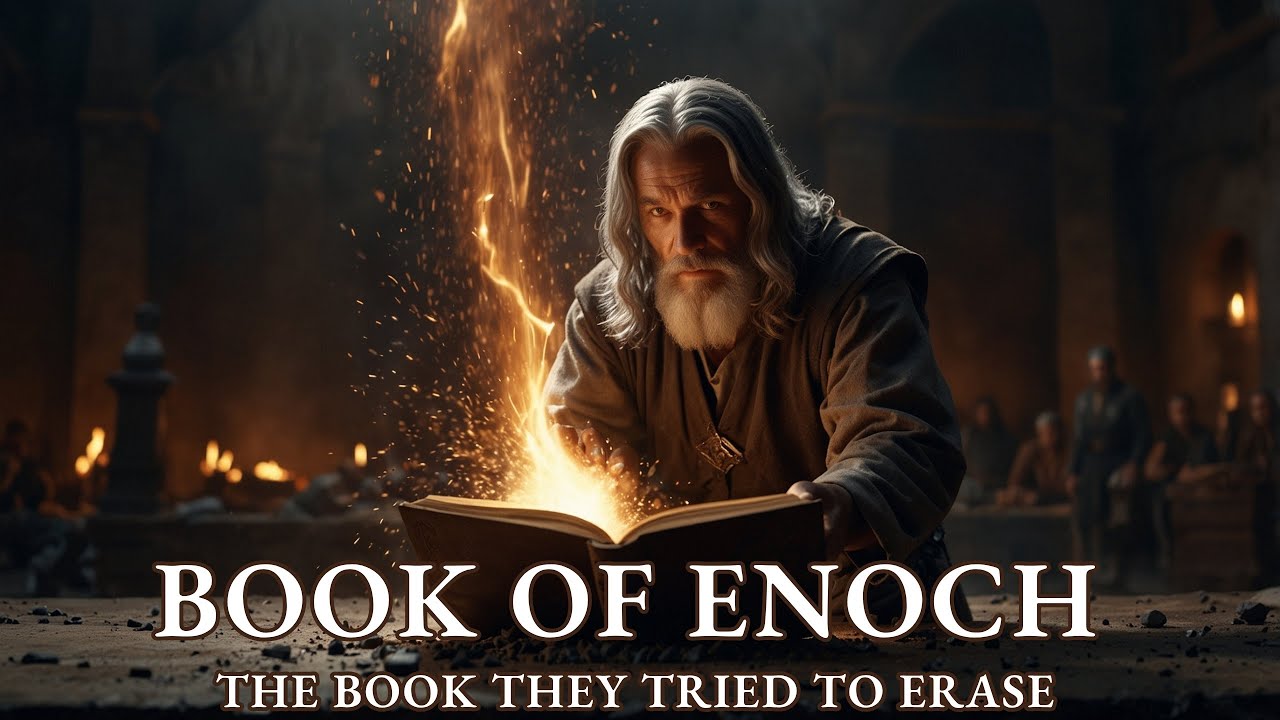
The narrative grows darker as it unfolds.
The text describes a world thrown into chaos, where the actions of these celestial figures contribute to widespread corruption and imbalance.
Violence increases, moral order breaks down, and humanity faces a crisis that appears both physical and spiritual.
In response, a divine judgment is introduced—a dramatic intervention meant to restore balance and address the consequences of what has occurred.
These themes bear similarities to stories found in more widely accepted biblical texts, particularly the account of the flood.
However, the Book of Enoch provides additional context and detail, presenting a more expansive and, in some respects, more complex narrative.
For some readers, this raises questions about how these stories evolved and why certain elements were included in canonical texts while others were not.
Scholars approach these questions with caution.
The Book of Enoch is generally understood to be a collection of writings composed over several centuries, rather than the work of a single author.
Its language, themes, and structure reflect the intellectual and cultural environment of the periods in which it was written.
As such, it offers valuable insight into the beliefs and concerns of ancient communities, particularly those engaged in early Jewish thought.
But beyond its historical significance, the text continues to provoke deeper reflection.
Its descriptions of cosmic journeys, layered heavens, and detailed visions of judgment and order suggest a worldview that is both intricate and symbolic.
Enoch’s role as an observer and recorder places him at the intersection of human and divine realms, creating a narrative that blends theology, philosophy, and storytelling in ways that remain compelling even today.
In recent years, advances in technology and increased access to ancient manuscripts have brought renewed attention to the Book of Enoch.
Digital archives, high-resolution imaging, and collaborative research efforts have made it easier than ever for scholars and the public alike to explore texts that were once difficult to access.
This has led to a surge of interest, with new interpretations and discussions emerging across a wide range of platforMs.
At the same time, the spread of information online has contributed to the rise of more sensational claiMs.
Some interpretations present the Book of Enoch as a hidden or suppressed truth that fundamentally contradicts established religious narratives.
Others suggest that it contains literal accounts of historical events involving non-human entities or advanced knowledge.
While these ideas capture attention, experts emphasize the importance of distinguishing between scholarly analysis and speculative interpretation.
The Book of Enoch, they argue, should be understood within its historical and literary context.
It reflects the concerns of its time—questions about justice, order, and the relationship between humanity and the divine.
Its vivid imagery and dramatic storytelling are part of a broader tradition of apocalyptic literature, a genre that uses symbolic language to explore complex ideas about the world and its future.
Yet the sense of intrigue persists.
Part of what makes the Book of Enoch so compelling is the way it expands on familiar themes while introducing new elements that challenge readers to think differently.
It invites questions about the nature of knowledge, the boundaries between the human and the divine, and the ways in which stories are preserved, adapted, or set aside over time.
Why was it not included in most biblical canons?
The answer lies in a combination of factors.
Questions about authorship played a significant role.
Unlike texts that were more clearly linked to recognized figures or traditions, the Book of Enoch’s origins were less certain.
Its theological perspectives also differed in ways that may not have aligned with the criteria used by early religious authorities when determining which texts to include.
Over time, as canon formation progressed, the Book of Enoch remained outside the collection that would become the standard Bible for many communities.
This process was not unique to Enoch.
Many ancient texts were considered, debated, and ultimately excluded for a variety of reasons.
The formation of religious canons is a complex and often contested process, shaped by historical, cultural, and theological considerations.
Understanding this context helps to clarify why certain texts are included while others are not.
Even so, the Book of Enoch continues to occupy a unique place in the landscape of ancient literature.
It is both connected to and distinct from the traditions that surround it, offering a perspective that is at once familiar and unfamiliar.
For readers, this duality can be both intriguing and unsettling, prompting a reevaluation of what is known and what remains uncertain.
As discussions continue, the importance of careful interpretation becomes increasingly clear.
Ancient texts are not simply records of events; they are expressions of ideas, beliefs, and questions that shaped the people who created them.
Reading them requires attention to context, language, and intent, as well as an awareness of the ways in which meaning can evolve over time.
The renewed interest in the Book of Enoch reflects a broader curiosity about the past.
People are seeking to understand not only what happened, but how it was understood by those who lived it.
In this sense, the text serves as a bridge—connecting modern readers with ancient perspectives, and inviting exploration of ideas that remain relevant across centuries.
It also highlights the enduring power of stories.
Whether viewed as historical, symbolic, or somewhere in between, the narratives within the Book of Enoch continue to resonate.
They speak to fundamental questions about existence, morality, and the nature of the universe—questions that have no simple answers, but that continue to inspire inquiry and reflection.
In the end, the significance of the Book of Enoch may lie not in any single revelation, but in the conversation it generates.
It challenges assumptions, encourages exploration, and reminds us that history is not a fixed narrative, but a complex tapestry of perspectives, interpretations, and discoveries.
As more people engage with the text, its role in that ongoing conversation is likely to grow.
And as it does, one question remains at the center of the discussion:
What other stories, preserved in fragments or forgotten entirely, might still be waiting to reshape our understanding of the past?