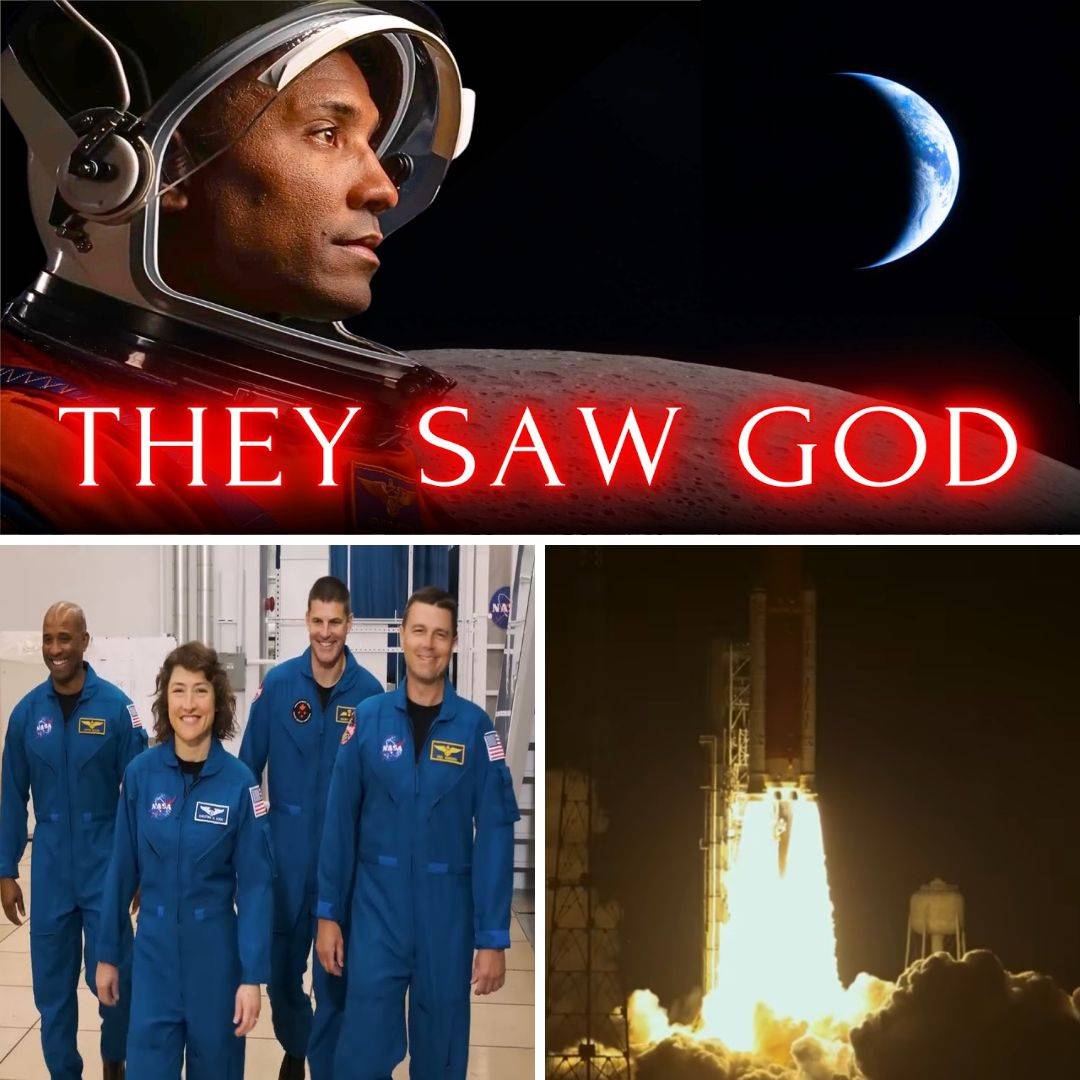
In April 2026, NASA’s Artemis II mission shattered decades of space exploration silence as astronaut Victor Glover revealed a profound, unprecedented spiritual experience. Far beyond Earth’s orbit, Glover’s heartfelt words from lunar orbit, intertwined with faith and science, delivered a powerful message: amidst cosmic vastness, humanity urgently needs Jesus.
 Four astronauts aboard the Orion spacecraft embarked on Artemis II, traveling farther from home than any since Apollo 11. Pilot Victor Glover, a man of science and Christian faith, secretly carried a Bible—his companion for a demanding voyage into the unknown.
Days before launch, Glover surprised the world by asking for prayers—not for conquest, but for trust and endurance. He sought spiritual strength for the crew and their families facing the mission’s challenges, signaling that faith would be as vital as technology.
Once in orbit, the astronauts encountered the profound silence of space—a void so absolute it transforms those who experience it. From this cradle of cosmic stillness, Glover and his crewmates beheld Earth, a fragile blue orb suspended against infinite darkness, awakening an awe that pierced their souls.
This familiar sensation, known as the “overview effect,” revealed humanity’s shared home with unprecedented clarity. Glover described Earth as a single hole, no visible borders, inviting a vision of unified existence transcending earthly divisions and strife—echoing Jesus’ ancient commandment to love God and one’s neighbor.
On Easter Sunday, Artemis II’s crew spontaneously shared their reflections with Earth. Glover spoke openly about creation’s majestic beauty and humanity’s intimate connection to it, touching on spirituality without script or agenda—his raw, heartfelt words igniting profound global reverence.

The mission’s defining moment came as Orion passed behind the Moon, cutting all communication with Earth for 45 minutes—the loneliest position in history. Glover’s final words before silence were not technical but deeply human: a recognition of Earth’s love and a quiet prayer, an intimate act amid utter cosmic isolation.
Such moments evoke echoes from history—Apollo 8’s 1968 Genesis reading from lunar orbit and Apollo 11’s secret communion on the Moon’s surface—highlighting an enduring bond between humanity’s exploration of space and a quest for meaning beyond technology.
Glover reflected on Earth as a divinely crafted spacecraft, designed with precise balance to sustain life. From that vantage point, the meticulous harmony of atmosphere, water cycles, and oxygen embodied God’s invisible care—a planet suspended “on nothing” as ancient scripture foretold millennia ago.
The astronaut’s many spiritual insights reached their crescendo when he declared, “We need Jesus.” This statement, from a scientist orbiting the Moon, underscored a universal truth felt deeply across crewmates and viewers alike—faith is inseparable from humanity’s place in creation and the challenges ahead.

Jeremy Hansen echoed these themes, emphasizing human unity and love’s boundless reach as central mission takeaways. Together, the crew’s unplanned Easter message fused scientific marvel with spiritual awakening, reminding the world of shared hope amid division and uncertainty.
This unprecedented openness from Artemis II’s astronauts rewrites the narrative of space exploration. It’s no longer just a technological feat but a profound encounter with the sacred, a visceral confirmation that faith and science coexist, illuminating humanity’s deepest questions.
Such revelations prompt reflection on centuries-old Biblical texts—awe-inspiring verses from King David and Job that described cosmic truths validated centuries later by human eyes from space. The Bible’s ancient wisdom shines anew, bridging eras and inspiring belief in a Creator’s enduring presence.
Artemis II’s spiritual voyage compels humanity to recognize Earth’s uniqueness and the Creator’s loving handiwork. No other known planet matches its delicate balance, standing as a silent testimony to divine design amid a vast, seemingly indifferent universe.

The mission concludes not with political rhetoric or scientific jargon but with an urgent call to embrace faith in daily life. Glover’s simple prayer from deep space challenges us: in a fractured world, love and belief are essential for survival and meaning.
This momentous journey reaffirms that God’s presence transcends space and time. Whether orbiting the Moon or standing on solid ground, faith remains the ultimate anchor, guiding humanity through the unknown with hope and unshakable love.
As Artemis II’s story unfolds, it invites every person to look beyond the stars, see God’s imprint in creation, and open their heart to a transformative relationship with Jesus—a message as urgent and timeless as the mission itself.
NASA’s Artemis II mission has thus transcended exploration, igniting a global conversation on the intersection of science, faith, and the human spirit. Its revelations remind us that in the vast cosmos, we are not alone—our Creator remains near, watching with infinite love.