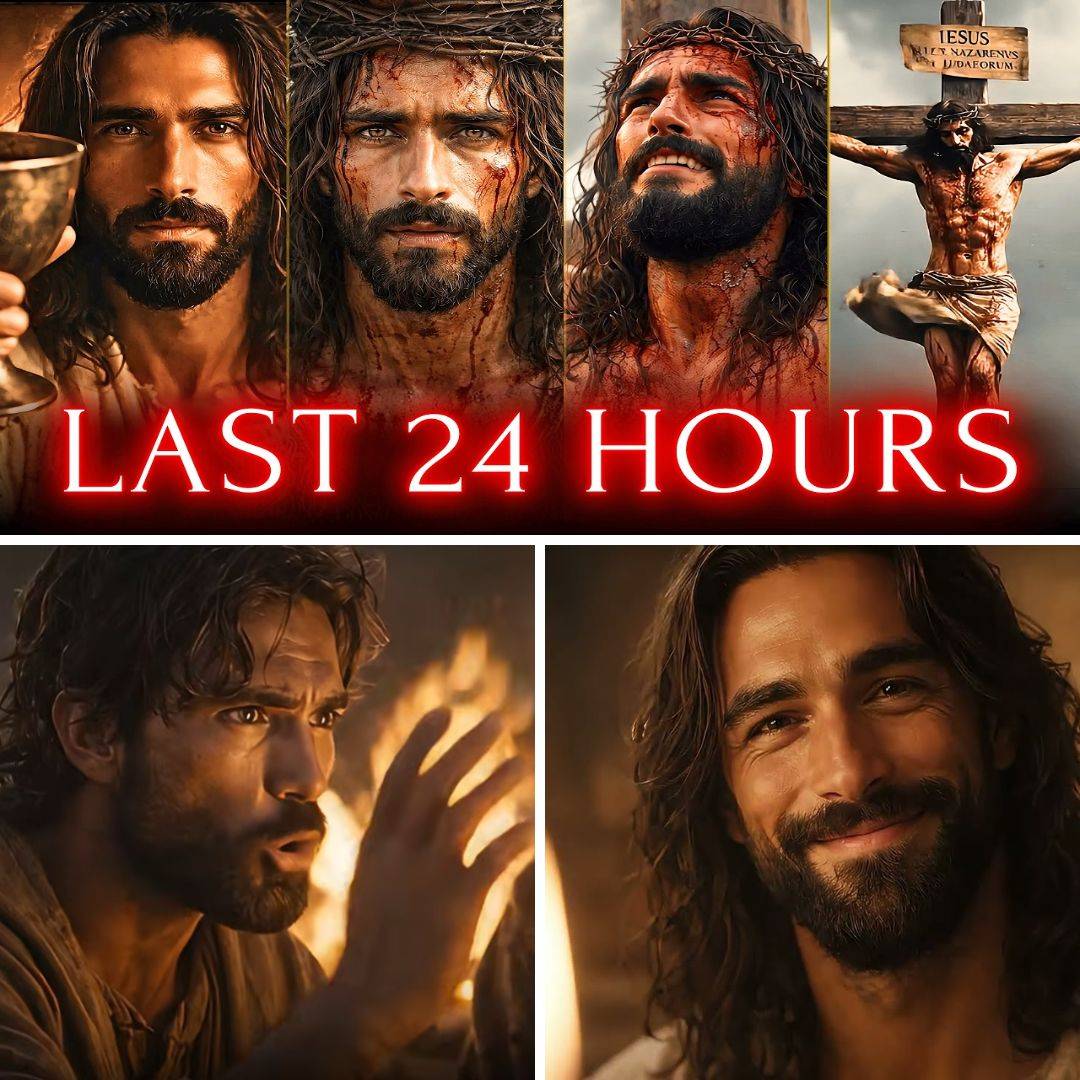
In a stunning sequence of events, Jesus of Nazareth faced betrayal, arrest, and crucifixion within the last 24 hours, culminating in his death and burial. This unfolding tragedy shook Jerusalem, as ancient prophecies were enacted and a profound narrative of sacrifice and redemption reached a brutal climax.
 As the Passover feast approached, Jesus was fully aware that his destiny was near. His love for his followers remained unwavering, even as enemies plotted against him. The chief priests and teachers of the law sought to eliminate him, fearing his influence over the people. In a dark turn, Satan entered Judas Iscariot, one of Jesus’ twelve disciples. Judas conspired with the temple guards to betray Jesus for thirty silver coins, setting the gears of fate into unstoppable motion.
On the first day of unleavened bread, Jesus instructed his disciples to prepare for the Passover meal in a specific house within the city. As they gathered, the atmosphere grew tense. Jesus, knowing all that was to come, took the humble position of a servant and washed his disciples’ feet, teaching a lesson in love and humility even as the shadow of betrayal loomed.
During the meal, Jesus revealed that one of them would betray him. Hearts ached and suspicion fell upon Judas, who after receiving bread from Jesus, left to carry out his treacherous deed. Jesus comforted his remaining followers, imparting his final teachings about love, faith, and the coming of the Holy Spirit, preparing them for the trials ahead.
The night deepened, and Jesus led his followers to the Mount of Olives. As his soul wrestled with impending suffering, he pleaded with the Father in anguished prayer. An angel offered him strength, yet his distress was so intense that his sweat fell like blood. Despite his fear, Jesus accepted his fate, urging his disciples to remain vigilant although they faltered and fell asleep.

Suddenly, Judas arrived with a hostile crowd to seize Jesus. With a kiss, Judas identified Jesus to the arresting soldiers, an act of ultimate betrayal. When Peter drew a sword to defend him, Jesus rebuked violence and allowed himself to be taken, knowing that these events fulfilled prophetic scripture. His disciples scattered, abandoning him to face the hostile authorities alone.
Jesus was taken to Annas, and then to Caiaphas, the high priest who orchestrated the condemnation. Despite false testimonies, no legitimate evidence could condemn him. When questioned directly about his identity as the Christ, Jesus affirmed it boldly, resulting in the charge of blasphemy. Mocked and beaten by religious leaders, Jesus endured humiliation with silent dignity.
Meanwhile, Peter, in the courtyard below, denied any association with Jesus three times, each denial more desperate than the last. At the crowing of the rooster, Peter remembered Jesus’s prediction and wept bitterly, overwhelmed by guilt and sorrow over his denial.

Before dawn, Jesus was brought before the Sanhedrin and then to Pontius Pilate, the Roman governor. Despite finding no fault in Jesus, Pilate was pressured by religious leaders demanding execution. Jesus was sent to Herod, who mocked him but released him back. Pilate attempted to release Jesus by offering the crowd a choice, but they demanded the release of Barabbas, a known criminal.
Jesus was scourged, crowned with thorns, dressed mockingly as a king, and handed over for crucifixion. The crowd shouted for his death, accusing him of blasphemy and sedition. Pilate washed his hands publicly, declaring himself innocent of Jesus’s blood, but yielded to the mob’s demands.
Carrying his cross, Jesus endured jeers and sorrowful lamentations from the women of Jerusalem. At Golgotha, he was crucified between two criminals. Despite suffering immense physical agony, he demonstrated remarkable compassion, forgiving his executioners and promising paradise to a repentant thief.

Darkness enveloped the land from noon until three in the afternoon. Jesus’s final moments were marked by a cry of abandonment and a declaration that his mission had been completed. At his death, extraordinary events shook the earth: the temple curtain tore, the ground quaked, and tombs opened, signifying a cosmic shift tied to his sacrifice.
After his death, soldiers broke the legs of the criminals but found Jesus already lifeless. A soldier pierced his side, releasing blood and water, fulfilling ancient scripture. Joseph of Arimathea, a secret follower, obtained permission to bury Jesus’s body in a new tomb, sealing it with a large stone as mourning shrouded the city.
The events of this day have sent shockwaves through Jerusalem, marking a pivotal moment in history. The son of God was condemned, betrayed, and crucified, yet his story promises a profound transformation. As this narrative unfolds, believers and observers alike grapple with the weight of what has transpired in these solemn last hours.