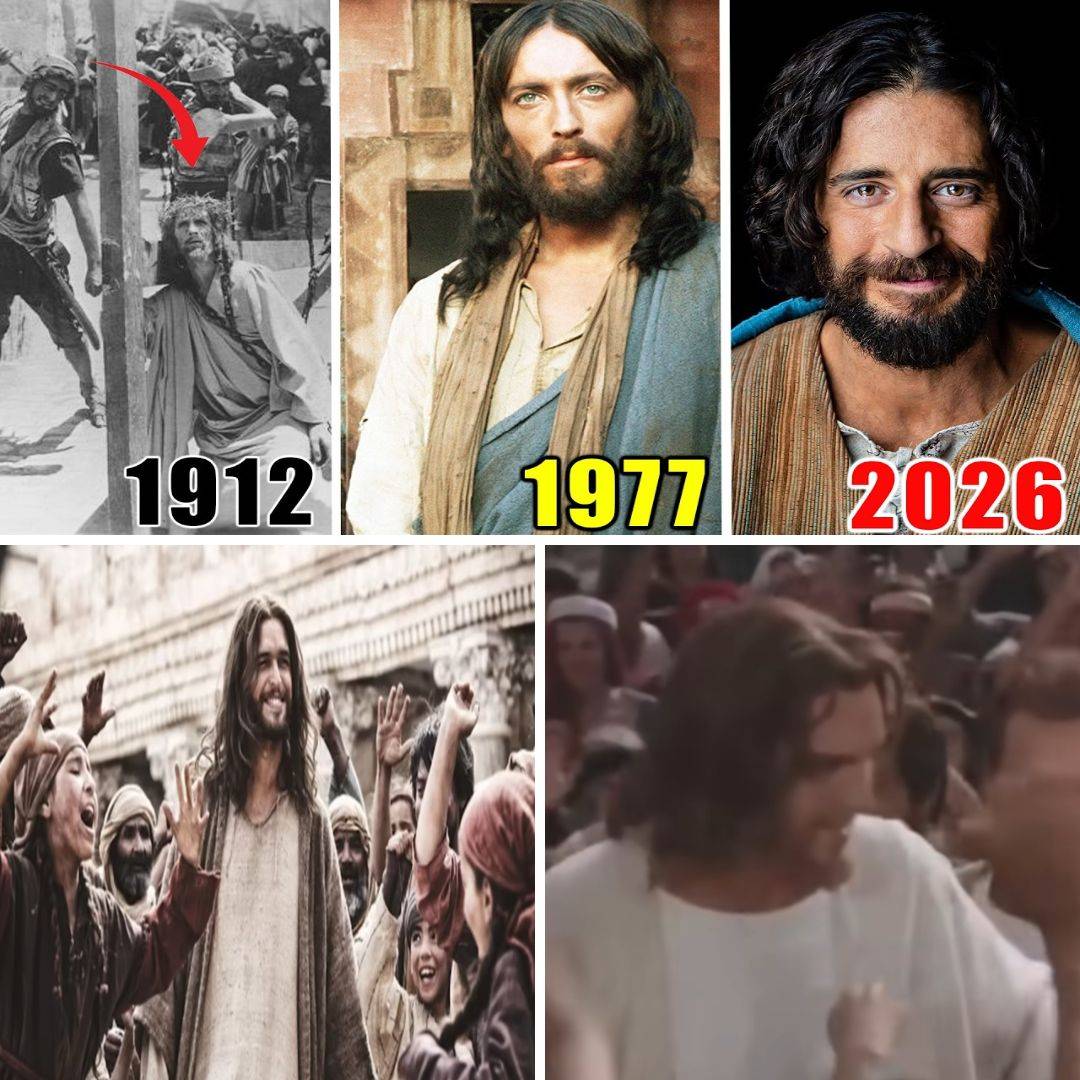
The portrayal of Jesus in film has undergone a breathtaking evolution from the silent screens of 1912 to the digital age of 2026, culminating in groundbreaking productions that redefine his image with unprecedented emotional depth and cultural impact. This century-long journey reveals a powerful transformation in how the Savior’s story resonates worldwide.
 It all began in 1912 with Robert Henderson Bland’s portrayal in “From the Manger to the Cross,” a silent British film remarkable for its authenticity, shot on location in the Holy Land. Despite technological limitations, the film set a high bar for biblical storytelling on screen.
By 1927, Cecil B. DeMille’s “The King of Kings” cast H.B. Warner as a solemn, majestic Jesus, solidifying the biblical epic’s place in cinematic history. This silent film impressed audiences with its grand scale and visually commanding interpretation of Christ.
In 1959, Claude Heater’s understated Jesus in “Ben-Hur” introduced reverent mystery through presence rather than face time, deepening the divine enigma that surrounded the Messiah’s cinematic image. His shadowy depiction amplified a spiritual mystique rarely captured before.
The 1960s ignited a new era of grand, sweeping biblical dramas. Jeffrey Hunter’s youthful, compassionate Christ in 1961’s “King of Kings” sparked debate with his unconventional appearance. His tender yet firm portrayal challenged traditional expectations, blending solemnity with approachability on a monumental scale.
Four years later, Max von Sydow’s introspective and mystical Jesus in “The Greatest Story Ever Told” offered a contrast through restraint and contemplative depth. Though visually impressive, the film faced criticism for a star-heavy cast and pacing, polarizing audiences on authenticity versus spectacle.
The seismic shift came in 1973 when Ted Neeley’s raw, rock-infused Jesus in “Jesus Christ Superstar” shattered established images. His intensely human Messiah, rife with vulnerability and doubt, ignited controversy and captivated a generation seeking a fresh, emotional spiritual experience.

Franco Zeffirelli’s 1977 “Jesus of Nazareth,” starring Robert Powell, has since been hailed as definitive. Powell’s serene blue-eyed Jesus, combining calm authority with deep empathy, became ingrained in popular consciousness, delivering a six-hour biblical epic that remains a cornerstone of religious film.
In 1979, the evangelistic film “Jesus,” featuring Brian Deacon, radically expanded the reach of Jesus’ story. Translated into over a thousand languages, its direct gospel adherence made it an unparalleled tool for global mission work, touching hearts in diverse, remote communities through simplicity and faithfulness.
The transition to humanizing Jesus advanced further through 1980s and 1990s television films. Chris Sarandon’s portrayal in “The Day Christ Died” emphasized physical agony and the Savior’s mortality, while Willem Dafoe’s controversial, psychologically complex role in 1988’s “The Last Temptation of Christ” challenged boundaries with haunting intensity.
By 1999, Jeremy Sisto’s warm, smiling Jesus in the mini-series “Jesus” reflected a pivotal turn toward empathy and relatability. This brighter depiction of Christ as a joyful, emotionally available figure endeared him to a new audience, reshaping popular perception with freshness and humanity.
Entering the new millennium, cinematic depictions demanded heightened authenticity and immediacy. Mel Gibson’s 2004 “The Passion of the Christ,” starring Jim Caviezel, stunned with visceral, brutal realism of Jesus’ final hours. Its use of original languages and graphic violence provoked intense debate and epic box office success worldwide.

In 2013, the mini-series “The Bible” introduced Diogo Morgado’s compassionate Jesus to a diverse modern audience. His portrayal of a hopeful, approachable Messiah bridged cultural gaps, aided by the theatrical release of 2014’s “Son of God,” which highlighted Jesus’ humanity alongside his miracles and teachings.
2016’s “Risen” shifted narrative focus with Cliff Curtis as Jesus, whose brief but powerful appearances embodied peace and tenderness through the eyes of a Roman centurion investigating the resurrection. This subtle portrayal underscored Jesus’ transformative effect even on skeptics and former enemies.
Technological revolutions transformed Jesus’s image further through streaming phenomena. “The Chosen,” launched in 2019 via crowdfunding, presented Jonathan Roumie’s deeply human Christ—laughing, weeping, and embracing—redefining sacred storytelling for digital audiences while amassing millions of viewers globally with emotional intimacy and spiritual power.
In 2023, “His Only Son” connected Jesus symbolically to Old Testament promises, weaving biblical narratives across centuries. Although not the central figure, Jesus’ brief appearance significantly underscored his role as the fulfillment of divine sacrifice, emphasizing the unity of scripture in fresh cinematic context.
Animation entered the fray with 2025’s “The King of Kings,” an ambitious Angel Studios project starring Oscar Isaac’s majestic voice performance. This historic release shattered expectations, grossing $19 million opening weekend and ultimately exceeding $68 million, proving the timeless appeal of Jesus’ story in innovative formats.

Looking ahead, new productions such as “Bethlehem AD 0” explore Jesus’ early life amid political turmoil, adding layers to his cinematic mythos. Anticipation builds for “The Resurrection of the Christ, Part 1,” promising a groundbreaking continuation of Mel Gibson’s saga, centered on Christianity’s pivotal resurrection moment.
Meanwhile, “The Chosen” continues to expand, demonstrating that Jesus’ story remains vibrant, relevant, and adaptable. These portrayals prove no single image dominates; rather, Jesus’ multifaceted essence continuously evolves, stirring hearts across generations and cultures with enduring spiritual force.
From silent epics to streaming blockbusters, Jesus on film is a testament to storytelling’s power to transform belief, reveal new dimensions of faith, and inspire global audiences. Each portrayal, whether divine or deeply human, underscores a timeless truth: his story is far from finished.
Which cinematic Jesus resonates most with you? The intense sacrifice, gentle compassion, youthful hope, or raw struggle? The enduring legacy of these portrayals is undeniable—Jesus’ message continues to challenge, inspire, and move millions, as filmmakers push boundaries and audiences demand ever deeper connections.
In a world of constant change, the story of Jesus on screen remains a beacon, reflecting humanity’s search for meaning, purpose, and transcendence. The epic journey from 1912’s silent beginnings to today’s digital miracles confirms one truth: Jesus’ image will keep evolving, but his impact will never fade.