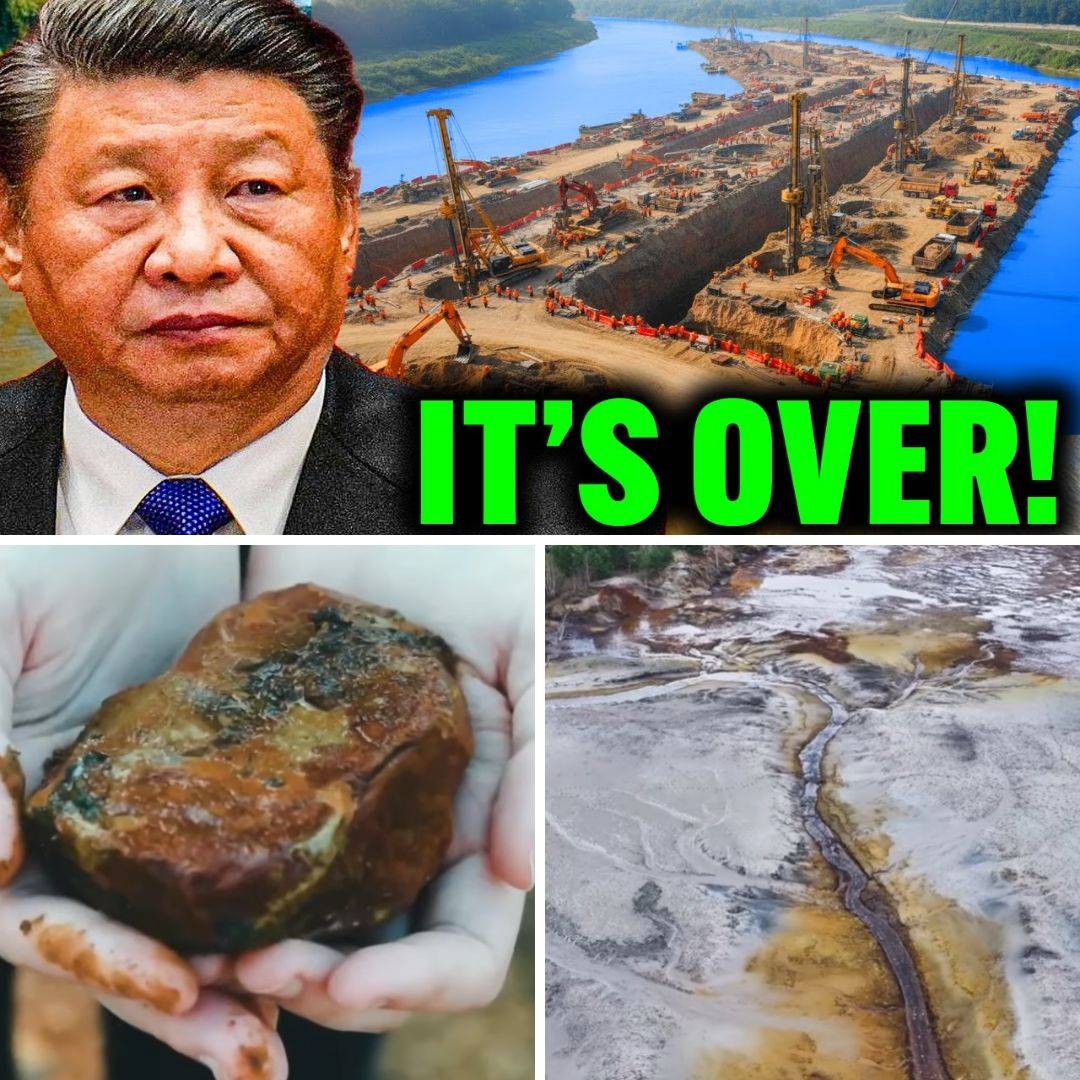
A groundbreaking discovery in West Virginia’s polluted rivers reveals vast deposits of rare earth minerals critical to America’s technology and defense industries, igniting a silent battle to reclaim control from China’s global dominance. This urgent development presents a potential game-changer amid escalating export restrictions that threaten U.S. national security and economic stability.
 Beneath the rusty orange waters of Decker’s Creek, a toxic legacy of abandoned coal mines now conceals a strategic treasure. Acid mine drainage, once dismissed as environmental waste, is rich with rare earth elements—the essential metals powering electric vehicles, smartphones, and advanced military hardware.
For decades, America has imported nearly all its rare earth minerals from China, which controls approximately 90% of global processing capacity. This chokehold is now weaponized through tightened export bans and technology blackouts, risking catastrophic disruptions to U.S. supply chains and manufacturing sectors.
Scientists at West Virginia University and government agencies have decoded a revolutionary process to extract these critical metals from the contaminated creek waters. Their breakthrough turns a century-old environmental pollutant into a domestic resource that could drastically reduce dependency on hostile foreign sources.
The ingenious two-step method raises the acidic water’s pH incrementally, first precipitating unwanted iron and aluminum, then coaxing rare earths from solution into concentrated sludges. These “geoexile” bags contain ore-grade materials far purer than many traditional mines, transforming pollution treatment plants into mineral recovery sites.
 This unconventional mining approach avoids the destructive environmental and safety challenges of conventional rare earth extraction, which involves massive rock excavation, crushing, and toxic chemical use. Instead, it offers a cleaner, faster, and more cost-effective alternative that leverages existing infrastructure in coal country.
The scale of this opportunity is enormous. Estimates suggest that just the Appalachia region’s runoff could yield half of the U.S.’s annual rare earth demand. Expanding these operations across multiple states could form a sprawling, resilient domestic supply network immune to geopolitical embargoes or blockades.
Yet, the race is on. While American scientists and engineers finalize pilot facilities, China has doubled down on restricting rare earth exports and processing technologies in retaliation to U.S. tariffs. These aggressive moves aim to keep the West reliant on Chinese-controlled supply chains indefinitely.
This rising tension transforms the quest for river-borne rare earths from an environmental project into a vital matter of national security. Washington is channeling significant Department of Energy funds to scale extraction plants, viewing them as strategic assets shielding U.S. industry from coercion and supply shocks.

The implications reach far beyond economics. Rare earth magnets are fundamental to renewable energy technologies, electric vehicle motors, and cutting-edge defense systems including guidance controls, night vision, and nuclear submarines. Losing access jeopardizes America’s technological leadership and military readiness.
In a profound twist of fate, the ravages of the 20th century coal industry may be the unexpected foundation for 21st century technological sovereignty. The same acid waters that poisoned streams could now fuel America’s clean energy and defense revolutions, anchoring economic independence in a resource once deemed garbage.
Challenges remain: refining the extracted concentrates into high-purity powders suitable for industrial use requires advanced solvent extraction plants and chemical processing, which must be built and scaled rapidly to meet urgent demand and stabilize fragile supply chains.
 Experts warn the critical question is timing. Can the U.S. scale this nascent industry swiftly enough to mitigate the impact of China’s aggressive export clampdown? Failure to act could result in factory shutdowns and stalled defense projects, with profound geopolitical consequences.
The discovery has galvanized industry leaders, policymakers, and scientists into a concerted mobilization to defend this hidden domestic bounty. Each ton of processed sludge is a strategic victory in an escalating global conflict over resources essential for survival and supremacy.
As America’s rivers continue to pour rare earths into treatment plants, a silent revolution unfolds—one that could redefine global power dynamics by turning decades of pollution into a priceless resource. The battle for control has begun, with the eyes of the world watching who will claim this critical lifeline first.
In the shadow of rust-colored streams, the future of American innovation and resilience quietly takes shape—poised to challenge China’s monopoly and secure the metals that keep the modern world spinning. The stakes could not be higher, nor the opportunity more urgently needed.