On February 1st, 2003, the space shuttle Columbia tragically broke apart over Texas, claiming seven lives and shattering the nation’s heart. A tiny piece of foam, no heavier than a toaster, critically damaged the shuttle’s wing during launch, setting off a devastating chain of preventable failures that culminated in disaster sixteen days later.
 The tragedy of the Columbia disaster is a haunting saga of overlooked warnings and fatal complacency. The vibrant streak witnessed across the Texas sky was not a meteor but the shuttle disintegrating upon re-entry. Search and rescue teams mobilized immediately, but the fate of Commander Rick Husband, Pilot William McCool, and their five crewmates was sealed far earlier.
On the morning of January 16, 2003, the shuttle blasted off from Kennedy Space Center encased in excitement and hope. However, exactly 81.7 seconds into flight, a fragment of insulating foam broke free from the external fuel tank and collided with Columbia’s left wing at nearly 500 miles per hour. What seemed trivial became catastrophic.
This chunk of foam, lightweight and porous under normal conditions, transformed into a deadly projectile traveling at Mach 2.5. Striking the shuttle’s left wing’s reinforced carbon-carbon panels—engineered to endure 3,000-degree heat—the foam caused critical damage that went dangerously unaddressed from the start.
NASA engineers reviewing launch footage identified the foam strike immediately, but mission management minimized its severity. Decades of routine foam shedding without incident lulled them into a false sense of security, dismissing the damage as inconsequential. This normalization of deviance would prove fatal.
Engineers on the ground, alarmed by models predicting significant wing penetration, pushed for thorough investigations. Despite their warnings, management rejected their concerns, deeming simulation results unrealistic. They chose to believe Columbia remained intact rather than confront the terrifying possibility of catastrophic wing failure.

As Columbia orbited Earth for sixteen days, the crew conducted groundbreaking scientific experiments, oblivious to the lethal damage hidden from them. Meanwhile, on the ground, a clash between cautious engineers and reckless leadership sealed the crew’s fate. Requests for satellite imagery to assess the wing were denied without explanation.
Linda Ham, head of the mission management team, questioned the utility of investigating damage, asking dismissively, “What are we going to do even if we find it?” This chilling response highlighted a brutal prioritization of schedule and image over astronaut safety. Critical warnings were muffled in bureaucracy and denial.
Throughout the mission, the crew received only vague assurances minimizing the foam strike. They were unaware that engineers had sought but were refused permission to obtain high-resolution images proving the wing’s compromised condition. The absence of a robotic arm and prohibitive risk assessments prevented any in-orbit inspection or repair.
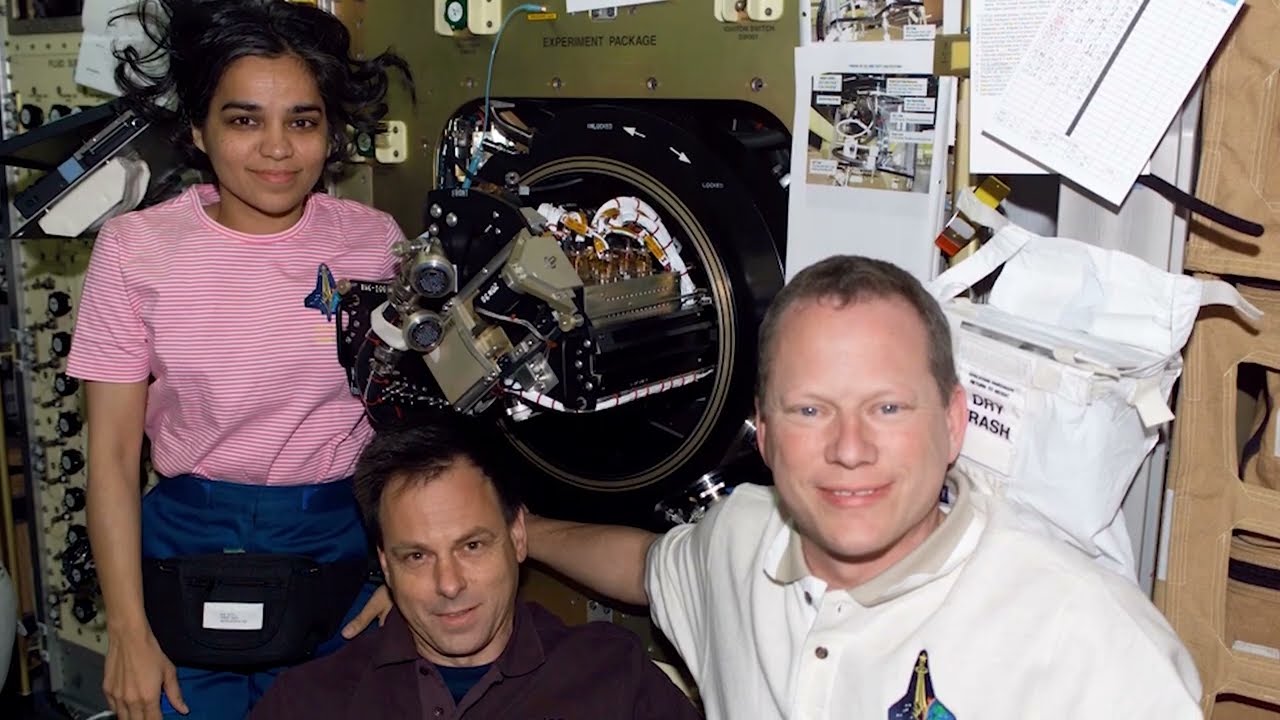
Inside the Columbia cabin, astronauts lived in dedication and camaraderie—conducting research, marveling at Earth’s beauty—while an invisible breach in their left wing silently sealed their doom. The contrast between their youthful optimism and the impending calamity embodies the core tragedy of this disaster.
As Columbia began re-entry, the compromised wing faced searing atmospheric forces. Sensor failures echoed through mission control as evidence mounted: the shuttle’s structure was failing. Autopilot efforts to maintain control proved futile. At 8:59 a.m., the shuttle broke apart at 18 times the speed of sound, scattering debris across Texas and Louisiana.

Mission controllers faced devastating silence; data streams stopped abruptly. The “lock the doors” order initiated somber protocols, preserving evidence for investigation. The tragedy shocked NASA and the world—seven courageous astronauts lost due to a perfect storm of engineering, management failures, and ignored warnings.
The investigation revealed an even darker truth: a rescue mission was possible but never attempted. Atlantis, another shuttle nearing launch readiness, could have been prepped urgently to save the crew if NASA acknowledged the damage early enough. This “what if” haunts spaceflight history and ethics.
The rescue plan entailed a perilous orbital maneuver and spacewalks transferring seven astronauts between shuttles—an unprecedented and politically daunting mission. Alternative plans to patch the wing or perform emergency repairs were considered but dismissed without trial. The failure to act was a failure of leadership and imagination.
Columbia’s disaster 𝓮𝔁𝓹𝓸𝓼𝓮𝓭 lethal systemic flaws: a culture of complacency, fear of disruption, and suppression of dissent. Engineers with valid concerns felt powerless within a rigid hierarchy emphasizing schedules over safety. This organizational failure parallels the normalization of risk that doomed Challenger seventeen years prior.
Recovery efforts covered vast East Texas terrain, retrieving 40% of the orbiter’s remains and crew members’ possessions. In a poignant moment, delicate sea creatures from a science experiment survived the catastrophe nearly intact—symbolizing life’s resilience amid human error and mechanical fragility.
The Columbia tragedy marked an irreversible turning point for NASA. The shuttle program, once a symbol of progress, was deemed too risky and retired. It underscored the need for fundamentally safer spacecraft. Today’s commercial crew capsules feature escape systems and safer designs born from hard-learned lessons from Columbia’s ashes.
Beyond hardware, Columbia’s legacy reshaped organizational culture worldwide. It serves as a cautionary tale against groupthink and normalized deviance—emphasizing the critical importance of listening to dissenting voices and acting on uncomfortable truths before catastrophe strikes
The remains of Columbia are preserved not as a museum but as a somber repository of failure and remembrance at Kennedy Space Center. The crew’s legacy endures through the science they performed and as a solemn reminder to prioritize safety in humanity’s quest beyond Earth.
The haunting “what if” lingers: had NASA embraced transparency and urgency, could those seven heroes have returned home? This question demands vigilant reflection for every mission that follows. The Columbia disaster compels us to never ignore the subtle signs and always challenge assumptions on the path to the stars.