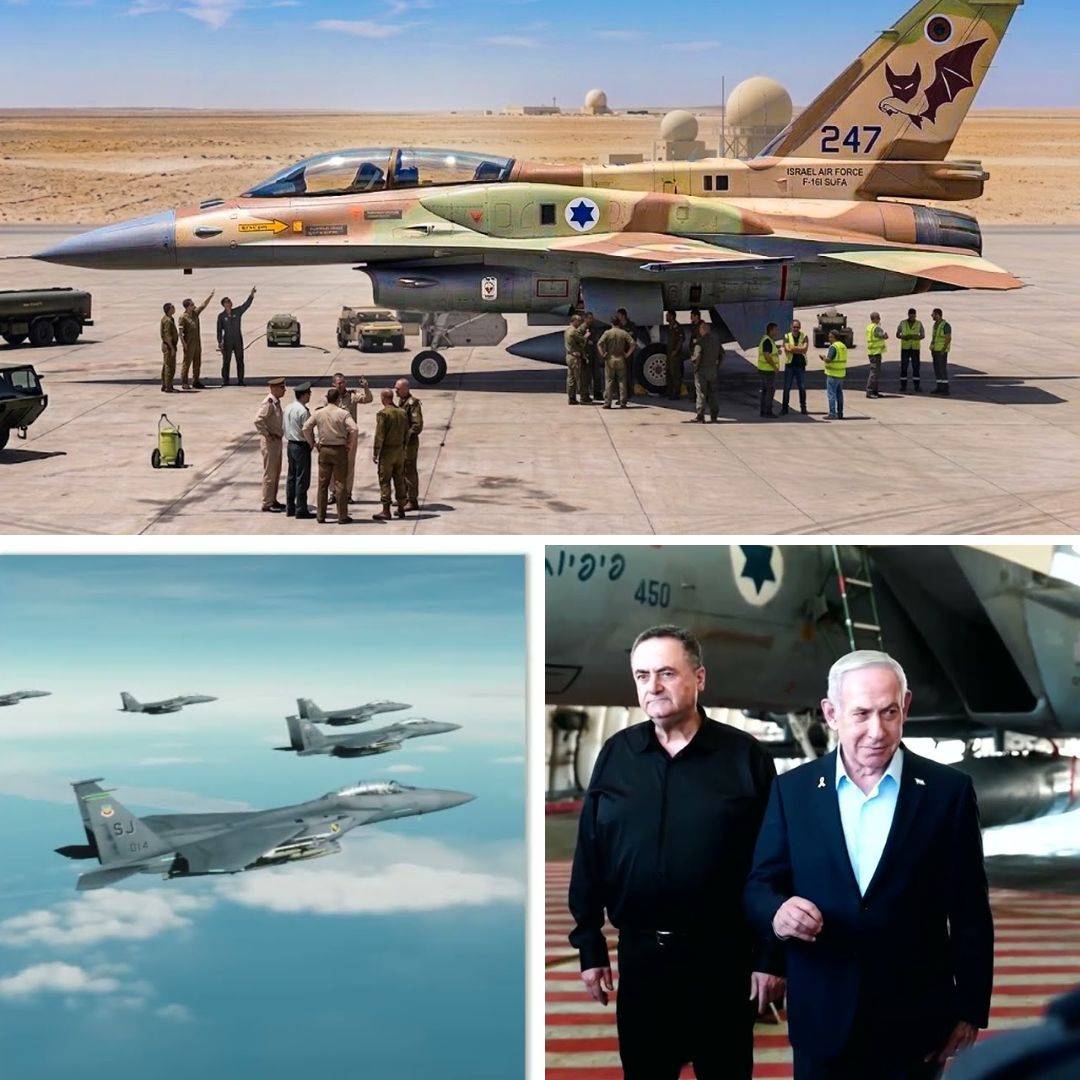
Israel’s secret air weapon, the F-16i Sufa, emerges as a crucial factor in the escalating tensions with Iran. This uniquely modified fighter jet, combining unprecedented range, firepower, and advanced electronic warfare, stands ready to execute deep strikes that no other aircraft in the Israeli fleet can manage.
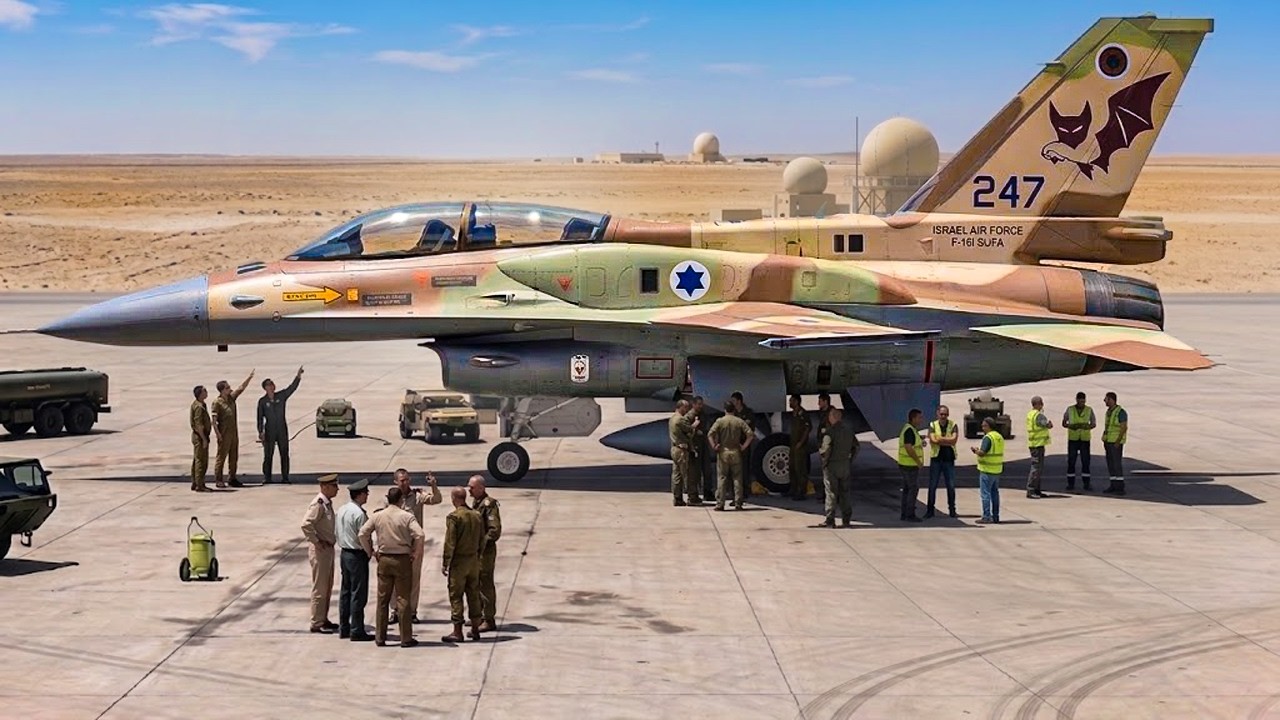 The F-16i Sufa is not your ordinary fighter jet. Beneath its rugged exterior lies a marvel of aerospace engineering, tailored specifically for Israel’s deep strike missions. Unlike the stealthy F-35, the Sufa prioritizes range, survival, and massive payload capacity, enabling it to reach and destroy highly fortified targets deep inside enemy territory.
Historically, this jet has a staggering combat record. It once obliterated Syria’s secret nuclear reactor and has struck targets across three countries in the past year alone. Today, it remains the sole aircraft capable of making a round trip to Iran and back, fully armed, amid the intensifying U.S.-Israeli bombing campaigns.
At first glance, the Sufa looks like a heavily modified General Dynamics F-16 Fighting Falcon, but the differences are profound. Israel stripped the standard U.S. avionics and installed advanced indigenous systems, recalibrating the aircraft’s combat mission entirely. This overhaul created a deep-strike juggernaut, tailored for long-range sorties against fortified, dispersed, and shielded objectives.
One of the Sufa’s revolutionary features is its conformal fuel tanks (CFTs). These blend seamlessly with the fuselage, storing extra fuel without sacrificing valuable weapon pylons or increasing drag significantly. This innovation doubles the jet’s bomb load and extends its operational range, overcoming the fundamental trade-off between fuel and armament.
The F-16i also integrates a raised dorsal spine, housing advanced electronic warfare suites. This built-in jamming capability disrupts enemy radar, effectively cloaking the aircraft from surface-to-air missile fire. Syrian air defenses have consistently failed to lock onto Sufas, highlighting the jet’s unparalleled survivability in contested airspace.
 Powering the SUFFA is a Pratt & Whitney F100PW229 engine, delivering over 29,000 pounds of thrust to haul almost 22 tons of fully loaded warplanes. This power-to-weight ratio preserves agility and energy in hostile environments where speed and maneuverability are survival factors, even under maximum combat loads.
Israel employs a deadly one-two combination linking the stealthy F-35I Adir with the Sufa. The F-35I suppresses and destroys enemy radar nodes, rendering air defenses blind and fragmented. Following this, the heavily armed Sufa jets flood the breach with precision-guided munitions, neutralizing targets far beyond the F-35I’s payload limitations.
This complementary 𝓀𝒾𝓁𝓁 chain capitalizes on the strengths of both planes: the Adir’s stealth and precision to clear the path, and the SUFFA’s bulk and punch to finish the job. One SUFFA alone delivers more ordnance than three F-35s carrying internal weapons, underscoring its pivotal role in any major offensive.
The Sufa’s cockpit houses a pilot and a dedicated Weapons Systems Officer (WSO), a two-person crew configuration now rare among modern fighters. The WSO’s role is crucial—managing complex targeting, weapons deployment, and electronic warfare, allowing the pilot to focus entirely on flying through heavily defended territories at treacherous low altitudes.
The advanced Israeli avionics suite integrates radar, electronic warfare, real-time threat data, and targeting pods into a unified tactical display, dramatically reducing pilot workload and elevating mission precision. The synthetic aperture radar mode alone enables pinpoint targeting through night, clouds, and adverse weather — vital for striking deeply buried and hardened nuclear facilities.

Israel’s enemies may be equipped with layered air defense systems like the Russian-made S-300, Tor-M1 batteries, and Iran’s indigenous Bavar-373. Yet, the SUFFA’s combined range, jamming abilities, and precision weapons systems have been engineered to penetrate, survive, and strike decisively within these formidable defense envelopes.
Geography amplifies the mission’s difficulty. Targets such as Iran’s Fordow enrichment plant lie more than 1,600 kilometers away, hidden under nearly 90 meters of reinforced concrete. The operational profile demands multiple aerial refuelings, precise timing, and seamless coordination among tankers, electronic warfare platforms, and combat jets.
Past analyses suggest that fulfilling Israel’s deep strike objectives might require up to 150 aircraft, including strike fighters and supporting assets. In this vast aerial choreography, SUFAs form the backbone of the strike force, combining lethal payloads with the endurance needed to hit multiple dispersed nuclear-related facilities in a single night.
The significance of the Sufa is often overshadowed by the glamour of stealth aircraft and media-favored technological marvels. Yet, it is this less-heralded fighter that enables Israel to project power with surgical precision against the gravest regional nuclear threat. The SUFFA’s design choices reflect a cold, clear-eyed strategy focused on results over appearance.
 Its secret weapon status stems from a deliberate policy of operational discretion. Unlike the F-35, sold to dozens of countries, the SUFFA remains exclusive to Israel, designed expressly for a singular, existential mission—stopping nuclear proliferation in the Middle East, regardless of the immense risks involved.
As tensions escalate, the SUFFA stands ready to tip the scales. It does not decide when or where to strike, but when the moment comes, it ensures that Israel can act—deep, fast, and hard. The fate of regional stability may hinge on this storm-bringer that few outside defense circles truly understand.
With each confirmed combat sortie, the F-16i Sufa underscores a vital truth: in modern aerial warfare, heavy payloads, electronic warfare integration, and operational range can outweigh stealth in decisive ways. Israel’s air force has built a tool capable of rewriting the rules of deep strike in hostile skies.
This jet’s profound capabilities offer a window into Israel’s strategic calculus—a blend of innovation, pragmatism, and tactical ruthlessness. As Iran’s nuclear ambitions continue, the SUFFA remains the linchpin of Israel’s deterrence and, if necessary, kinetic response strategies.
Stay tuned as the story develops. Israel’s F-16i Sufa may be the linchpin holding the fragile balance of power in the Middle East, a shadow weapon lurking high above, ready to unleash a storm that could reshape history.