The Billion-Dollar Ghost Fleet: Inside the “Trans Global” Cartel Money Laundry
MEDLEY, FL — On the morning of March 4, 2025, the Medley Industrial District was waking up to its usual symphony of grinding gears and air brakes. But at 6:47 a.m., the rhythm changed. A fleet of black SUVs swarmed a three-acre warehouse emblazoned with the logo of Trans Global Logistics Solutions.
To any passerby, Trans Global was a boring, successful freight company. It had the trucks, the manifests, and a CEO, Arturo Salazar, who was the quintessential American success story.
“We thought we were hitting a drug hub,” FBI Special Agent Rebecca Torres told The Chronicle while standing near the now-shuttered facility. “But when we breached the doors, there wasn’t a kilo of cocaine in sight. What we found was much more dangerous. We found the bank.”
Inside the main office, Torres was met by Miguel Cardenas, the company’s operations manager of 22 years. He was calm, his khakis pressed, his company polo crisp. “We run a legitimate freight operation,” he said, handing over the keys. “We have nothing to hide.”
He was lying.
The Cabinet of 37 Burners
The breakthrough came when Agent Marcus Chen pried open a locked cabinet in Cardenas’s private office. Inside were 37 burner phones, all active, all labeled with names like “Julio – Route 7” or “Raphael – Northeast Corridor.”
“Why does a trucking company need three dozen prepaid phones labeled by route?” Torres asked Cardenas.
For the first time, Cardenas’s hands began to tremble. He didn’t answer. He didn’t have to. The digital forensic team soon discovered thousands of coded messages: “Package ready for pickup” (Cash is available); “Route confirmed” (Driver is moving); “Delivery complete” (Money handed off).
The math was staggering. With 37 phones sending 400 messages a month, this wasn’t a side hustle. It was industrial-scale infrastructure built to move hundreds of millions of dollars across state lines.
A “Fortune 500” for the CJNG Cartel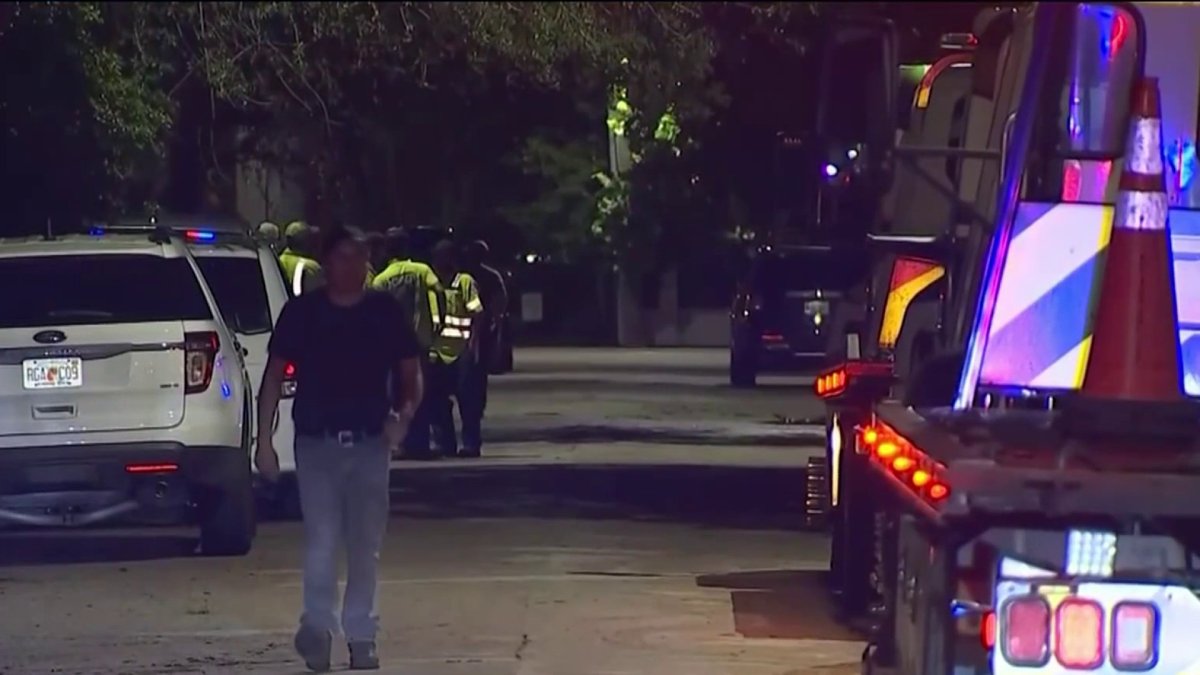
As the investigation deepened, the FBI’s “Epic” Intelligence Center in El Paso confirmed the nightmare scenario: Trans Global was a wholly-owned subsidiary of the Jalisco New Generation Cartel (CJNG), one of Mexico’s most violent and financially sophisticated organizations.
The operational method was brilliant in its simplicity. Trans Global maintained a fleet of real trucks moving real consumer goods—legitimate cover that generated genuine tax returns. But embedded within this fleet were “special assignment” drivers.
“These guys would finish their legal deliveries, then make ‘off-book’ stops,” Agent Torres explained. “They’d pick up millions in drug proceeds from street-level dealers in Atlanta, Charlotte, or Dallas.”
The cash was hidden in sophisticated, hydraulically operated compartments built into the trailers. These weren’t amateur welds; they were shielded with lead and specialized wiring to bypass X-ray scanners at highway checkpoints.
Smurfing on an Industrial Scale
Once the trucks returned to Florida, the “smurfing” began. Trans Global operated 43 bank accounts across 17 different financial institutions.
Forensic accountant Sarah Morrison spent months mapping the flow. “They never deposited more than $9,900 at a time,” Morrison said. “They had a roster of drivers making daily runs to different bank branches in Miami, Tampa, and Jacksonville. It was mechanical. It was relentless.”
The money would enter as cash, move into Trans Global’s corporate accounts, then vanish into a web of shell corporations in Delaware, Wyoming, and Nevada. From there, it was wired to the Cayman Islands and eventually into the pockets of cartel leadership in Guadalajara.
The Paper Trail of a Ghost Fleet:
| Category | Documented Value | Estimated Capacity |
| Traced Transactions | $320 Million | $1.44 Billion |
| Active Drivers | 23 Arrested | 40+ Suspected |
| Shell Companies | 12 Identified | Unknown |
| Time in Operation | 3 Years | 5+ Years |
The Takedown: Operation Clean Sweep
On March 11, 2025, the hammer fell. Simultaneous raids in eight cities netted 23 high-value targets.
Arturo Salazar, the CEO, was arrested at his $2.3 million Coral Gables mansion. He tried to flee through the back door but was tackled in his manicured garden. Richard Beaumont, a high-profile corporate attorney in Coral Gables, was handcuffed at his desk, charged with providing the legal “veneer” for the shell companies.
“Beaumont was the architect,” Torres said. “He didn’t just defend the company; he built the walls they hid behind.”
27 Years and a $78 Million Forfeiture
The legal aftermath was swift. Faced with 20,000 text logs and the testimony of 17 cooperating drivers, Salazar pleaded guilty to RICO charges and money laundering.
On August 14, 2025, Judge Patricia Gonzalez sentenced Salazar to 27 years in federal prison. “You perverted the American dream,” the judge stated. “You used the integrity of our financial system as a weapon for a foreign criminal power.”
The government seized:
-
$47 million in domestic bank accounts.
-
73 commercial vehicles (later sold at federal auction).
-
$12 million in warehouse facilities.
-
Luxury real estate across three states.
The Shadows That Remain
The Trans Global warehouse in Medley stands empty today, a hollowed-out monument to a billion-dollar betrayal. But for Agent Torres, the case isn’t over.
“The CJNG didn’t stop because we took 73 trucks,” she said, looking at the vacant lot. “They’re already building the next one. They’re finding the next CEO with a clean record and the next attorney willing to look the other way.”
The investigation revealed a terrifying truth: the American economy is so vast that a billion dollars can move through it like a ghost, hidden in the shadows of everyday commerce.
As you drive down the I-95 today, look at the trucks passing you. Most are carrying food, electronics, and medicine. But somewhere in that line, another “Trans Global” is likely rolling along, its hydraulic compartments packed with the paper spoils of an invisible war.