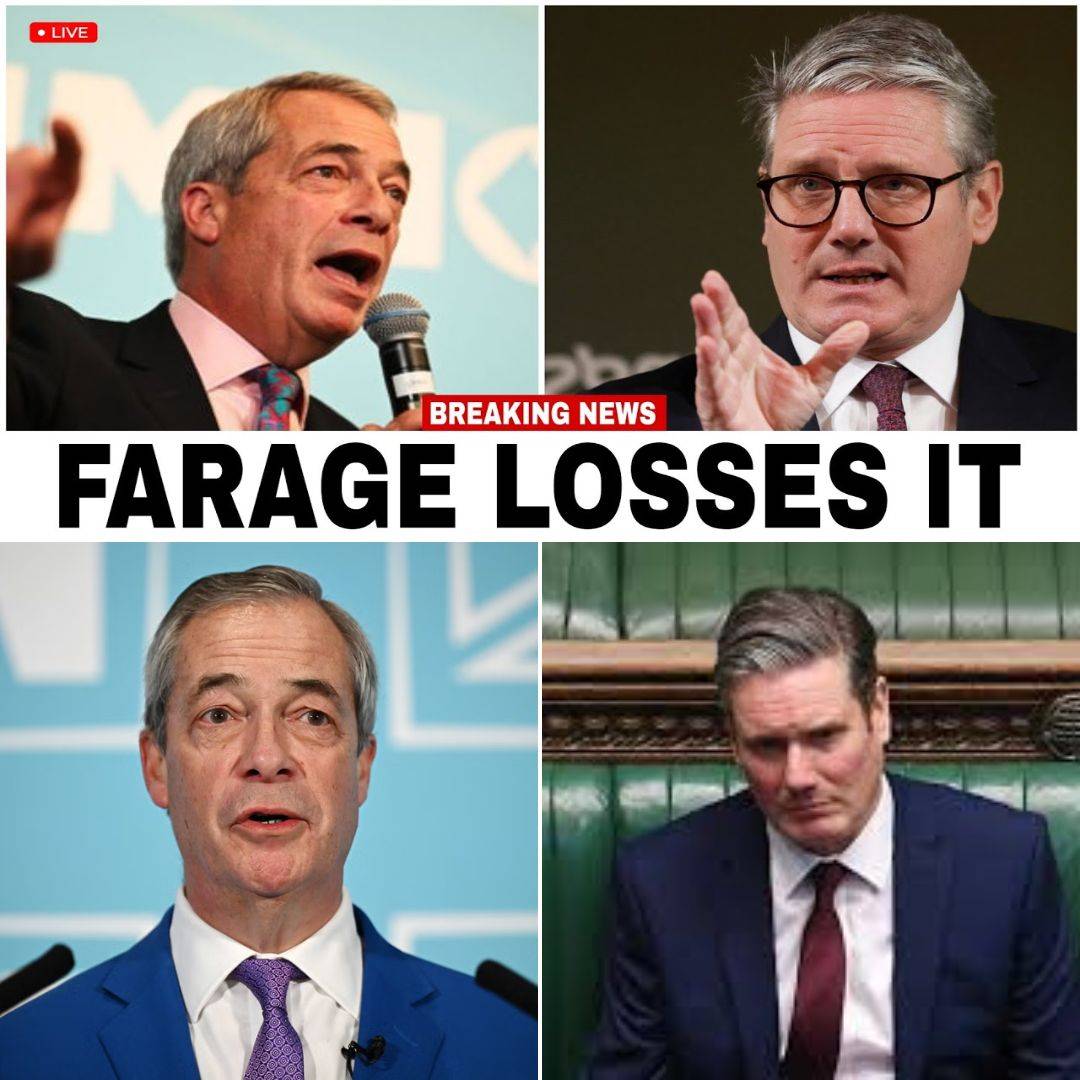
In a stunning political upheaval, Nigel Farage rises as a formidable contender to become UK Prime Minister, while Labour leader Sir Keir Starmer desperately warns his own party against leadership change, branding it “utter chaos.” New polling reveals Reform UK would win a majority if an election occurred today, signaling crisis for Starmer’s administration.
 In his first major interview of the year, Sir Keir Starmer launched a fierce defensive as internal party tensions mount. Instead of touting achievements or a vision for Britain’s future, Starmer warned Labour MPs that replacing him would lead to catastrophic disorder within the party. His repeated use of the phrase “utter chaos” reflected not confidence but deep vulnerability.
This strategic warning is a political plea from a leader on the ropes, signaling his precarious grip on power. Starmer compared Labour’s potential leadership upheaval to the Tory turmoil of 2022 and 2023, when three Conservative leaders fell in rapid succession. His message is clear: unity behind him is the only path to stability.
But the timing couldn’t be worse. Fresh polling data from a massive survey of 16,000 people reveals alarming shifts in public sentiment. Reform UK, led by Nigel Farage, is projected to secure a decisive majority, catapulting Farage into the role of Prime Minister if an election were held tomorrow. This eye-opening statistic casts a grim shadow over Labour’s prospects.
Starmer’s leadership is now squarely under threat, with murmurs of rebellion intensifying. Top Labour figures, including Health Secretary Wes Streeting and Manchester Mayor Andy Burnham, have been linked to potential leadership bids should Labour falter in the upcoming local elections in May. This looming showdown forces Starmer into a corner.

May 7th stands as the critical deadline. The local elections across England, Wales, and Scotland will mark a turning point for Starmer’s fate. Poor results could spark a leadership crisis with backbench MPs ready to challenge his position. The clock is ticking dangerously close for the incumbent Prime Minister.
The crisis is compounded by startling polling showing widespread disapproval of Starmer’s government. A staggering 68% of respondents expressed dissatisfaction, while only 12% approved of the current administration. Even more damning, half of Labour’s own voters want Starmer to resign — an unprecedented erosion of his core support.
Facing near-unprecedented unpopularity, Starmer’s attempts to reset the party’s image have fallen flat. His forthcoming speech promises to prioritize cost of living concerns, offering vague assurances of improvement by 2026. However, critics argue his proposals lack concrete measures, leaving voters skeptical of his ability to deliver real change.

Policy initiatives such as rail fare and fuel duty freezes, though helpful, are widely viewed as insufficient. These small economic reliefs cannot stem the tide of public disillusionment or address deeper anxieties over immigration and cultural identity — issues that have propelled Reform UK’s rapid rise and Farage’s renewed appeal.
The fractures inside Labour grow as influential figures prepare to seize leadership opportunities. Streeting’s bold NHS reforms and Burnham’s regional success have elevated their profiles, while Home Secretary Suella Braverman’s handling of tough immigration policies adds to the political 𝒹𝓇𝒶𝓂𝒶. These potential challengers sharpen their knives, waiting for Starmer to falter.
Despite Starmer’s insistence that he will remain Prime Minister next year, the reality suggests a party fractured, polling disastrously low, and a leader desperate to cling to power. His multiple resets and rebranding attempts risk being perceived as shaky and ineffective rather than revitalizing.

The historical comparison to Conservative instability only highlights Starmer’s predicament. Unlike Tory leaders who were ousted quickly after failure, Starmer appears to demand loyalty regardless of mounting losses. His reluctance to step aside mirrors stubbornness that may cost Labour dearly, not only electorally but in party morale and relevance.
The impending local elections threaten to deliver a devastating blow for Labour, particularly in traditional strongholds. Welsh Labour’s three-decade rule could be shattered, signaling a seismic realignment in British politics. If that happens, Starmer’s premiership would be left mortally wounded, potentially ushering in a new era under Farage’s ascendancy.
This political crossroads defines Britain’s current crisis: a Labour leader clinging to power amid plummeting support, a Reform UK surge promising radical change, and a nation deeply divided. Farage’s potential premiership is no longer fringe theory but a poll-backed reality backdrop, forcing urgent reckoning within Labour circles.
As the countdown to May tightens, the pressure ratchets higher. Starmer’s government faces an existential test: salvage leadership stability, renew voter trust, or succumb to the tide of political upheaval swelling around Nigel Farage and his growing base. The next few months may irrevocably reshape Britain’s political landscape.